Which Ptashka FPV drone to choose: radio and fibre-optic models compared
09.11.2026
By Ptashka Drones Editorial Team
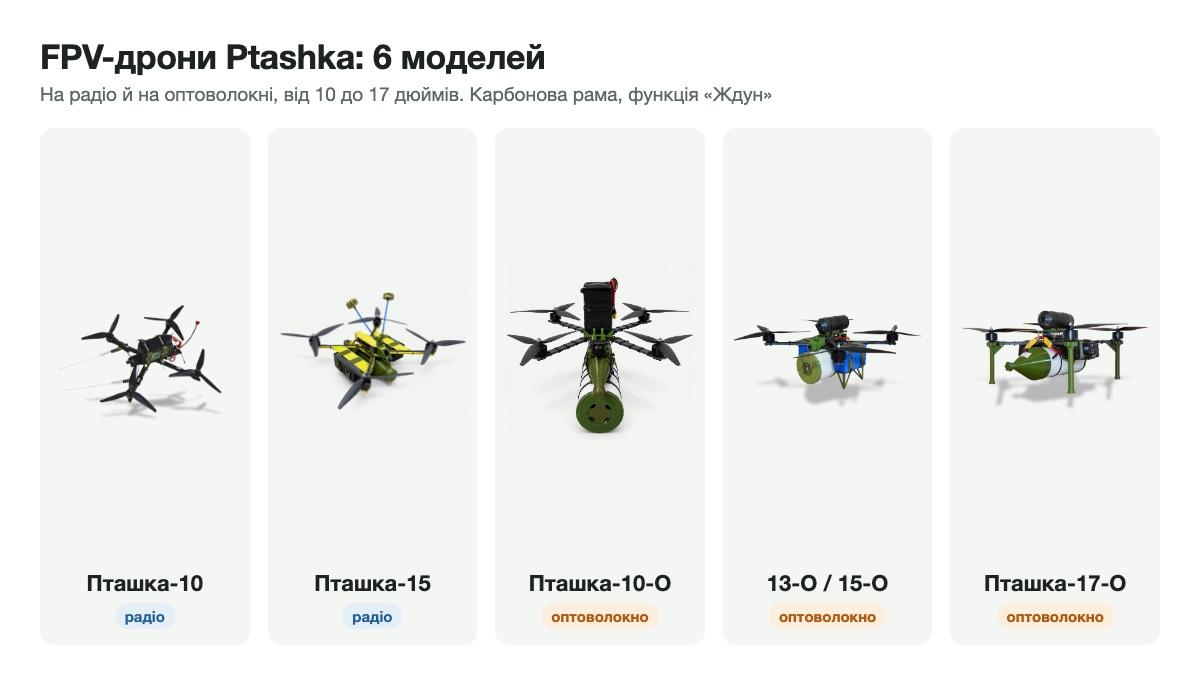
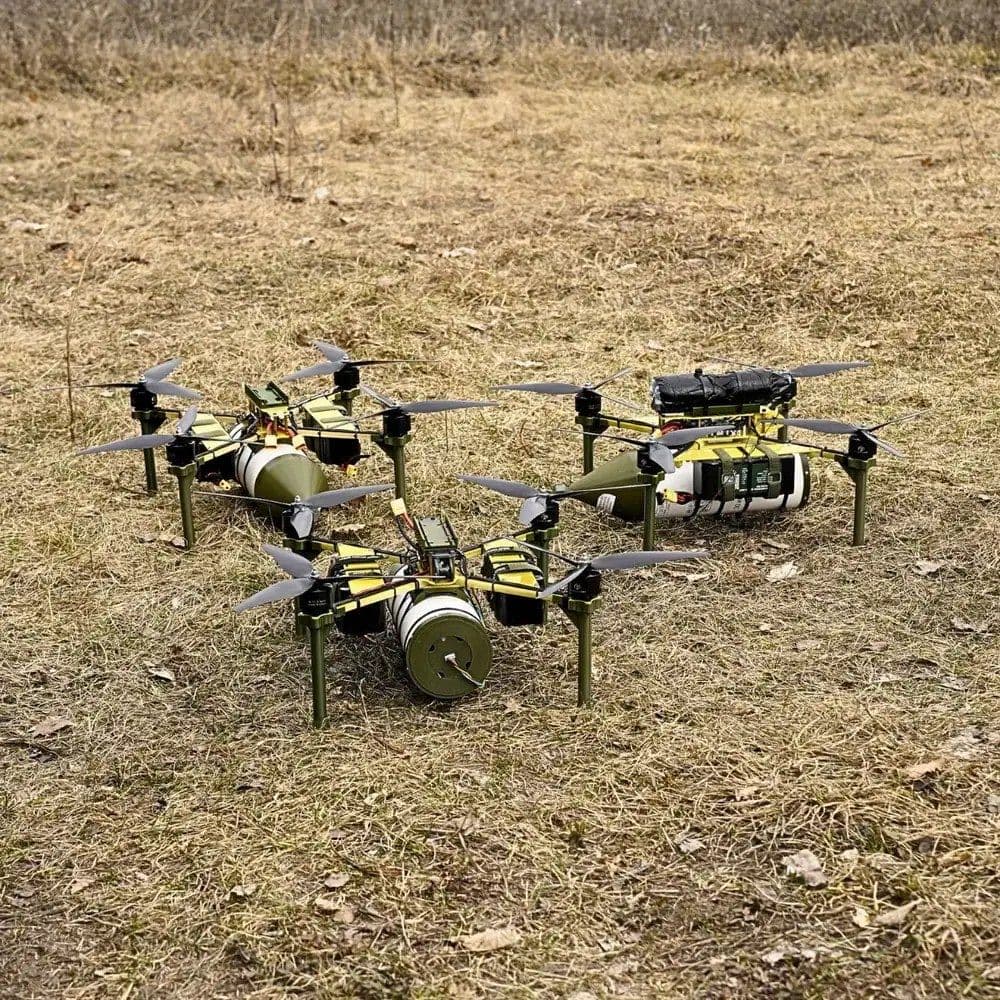
Ptashka Drones makes seven FPV drone models: two on a radio link, four on fibre optics and one with Starlink. All have a carbon frame and a flight controller adapted for the "Zhdun" ambush mode. They differ in communication link, size, cameras, range and payload. Below is a short overview of each model, a comparison table and four questions that help you choose.
In short: which model for which task
| What you need | Model |
|---|---|
| A 10-inch radio FPV with a night or day camera | Ptashka-10 |
| Radio, up to 50 km, up to 35 min flight, up to 3 kg payload | Ptashka-15 |
| The lightest fibre-optic platform, 15–20 km | Ptashka-10-O |
| Fibre optic, 10–20 km, the heaviest payload up to 3.5 kg | Ptashka-13-O |
| Fibre optic, 25–35 km | Ptashka-15-O |
| The longest fibre-optic range, 40–50 km | Ptashka-17-O |
Radio or fibre optic
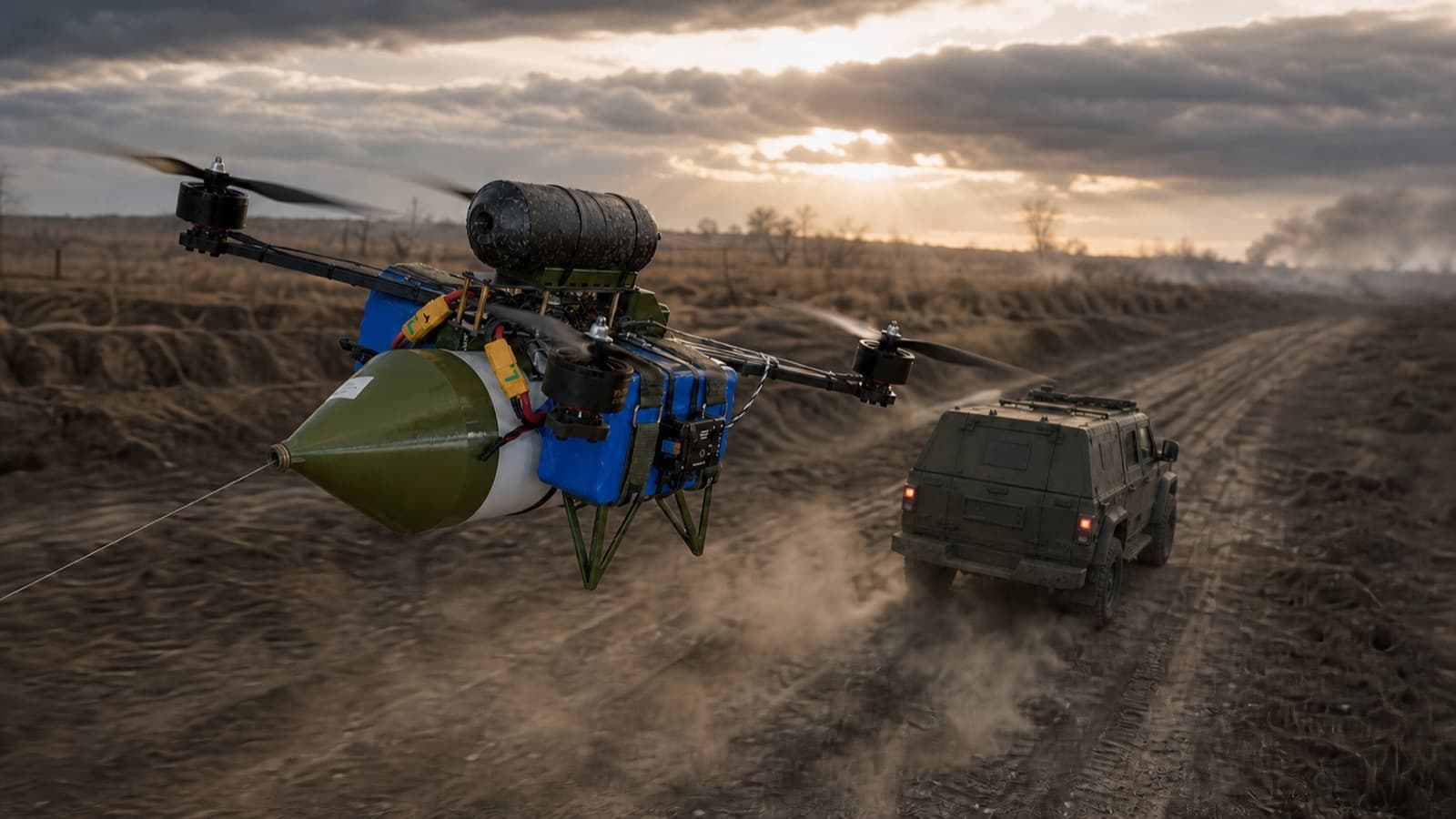
On a radio drone, control and video travel over a radio link. Such a drone does not trail a cable and is not limited by spool length, but electronic warfare can jam the radio link. On a fibre-optic drone the signal runs through a thin cable that unwinds from a spool in flight. It cannot be jammed by radio interference, and the range is set by the spool length.
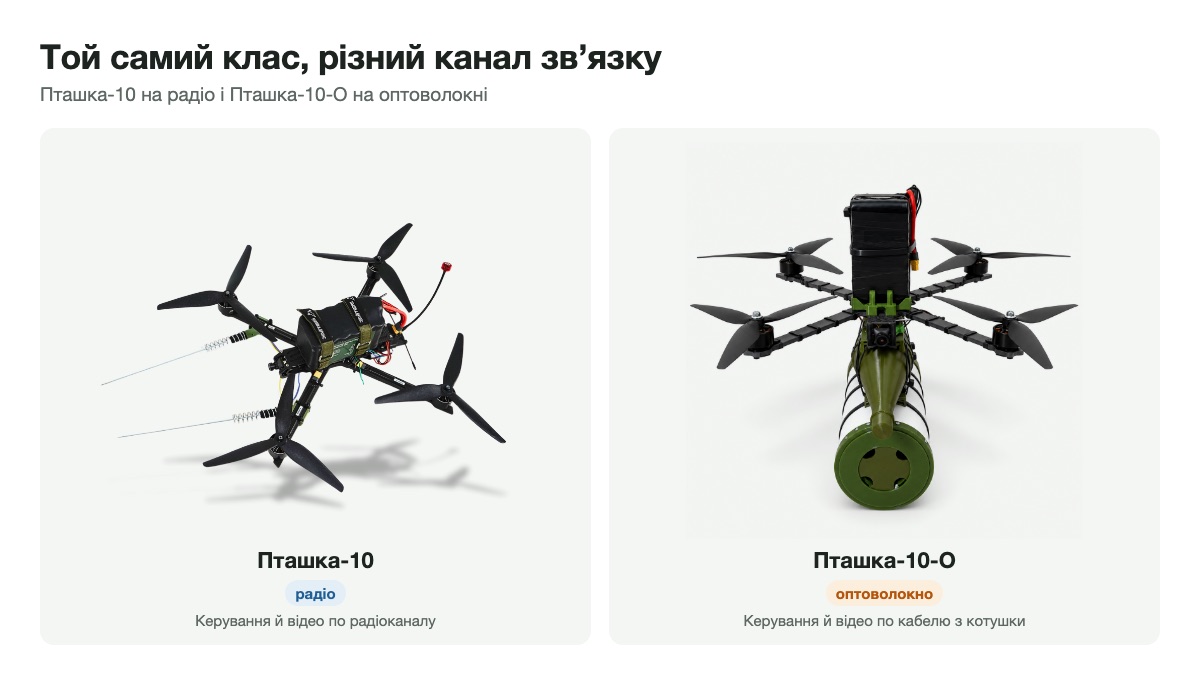
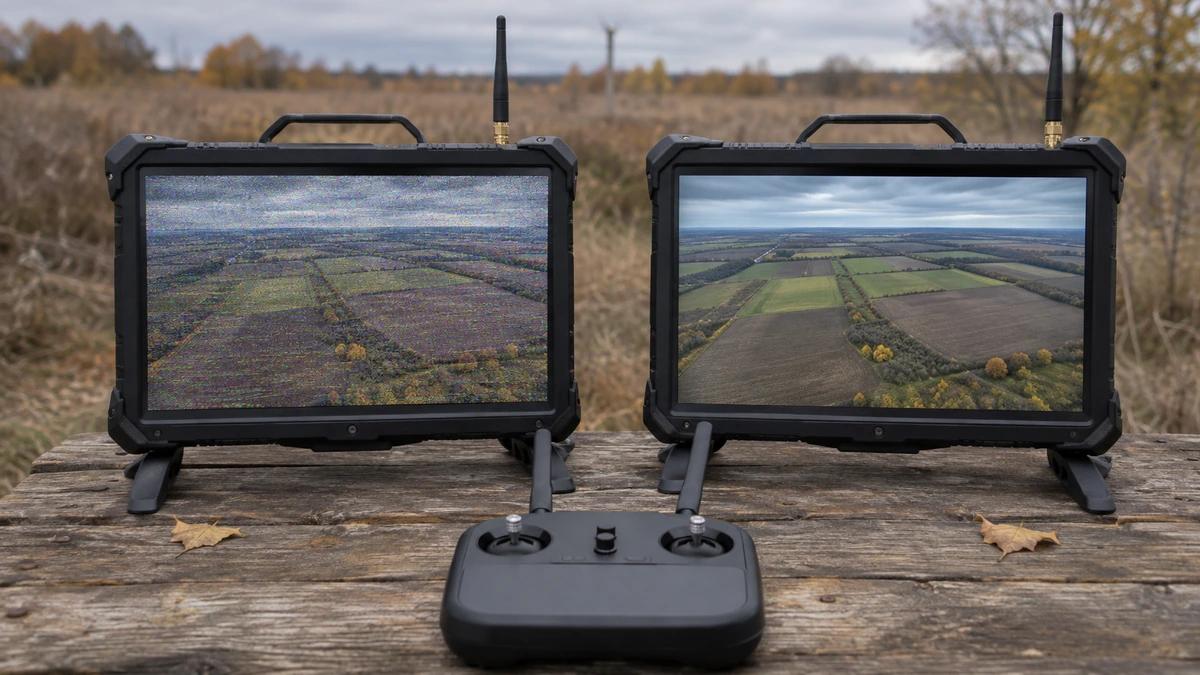
Both formats come in analog and digital versions; the digital one has a microphone. More in how to choose a radio FPV drone and how a fibre-optic FPV drone works.
Radio FPV drones
Ptashka-10
- Power system: 3115 900KV motors, 10-inch propellers, F722 60A controller.
- Link: dual-band ELRS control at 900 MHz and 2.4 GHz, 2.5 W video transmitter at 4.9–6.2 GHz. A digital video and control system at 4.9–6.4 GHz, 5 W, with automatic band and channel switching is available.
- Camera: night or day; both can be fitted with switching between them.
- Battery: 15,000, 20,000 or 25,000 mAh.
Packed two drones per box. Suits a unit that needs a classic 10-inch radio FPV where EW does not jam the link completely.
Ptashka-15
- Power system: 5215 500KV motors, 15-inch propellers, F743 80A controller.
- Range and flight: up to 50 km, up to 35 minutes, cruise speed 90 km/h, maximum 140 km/h.
- Altitude: operating 150–200 m, maximum 1,500 m.
- Payload: up to 3 kg.
- Camera and link: digital day camera, digital video and control system at 4.9–6.4 GHz, 5 W, two antennas. Recognises vehicles from 500 m and a standing person from 250 m.
Ptashka's largest radio model, for tasks that need long flight time, speed and a heavy payload.
Fibre-optic FPV drones
Ptashka-10-O
- Power system: A3115 900KV motors, 11-inch propellers, F722 65A controller.
- Camera: analog Ratel Pro 1500 TVL or thermal 640×512, digital Ptashka Full HD 60 FPS.
- Battery: 20,000 or 25,000 mAh.
- Range and payload: 15 or 20 km, 1.5 kg.
The lightest fibre-optic model, for when the radio link is jammed and a heavy payload is not needed.
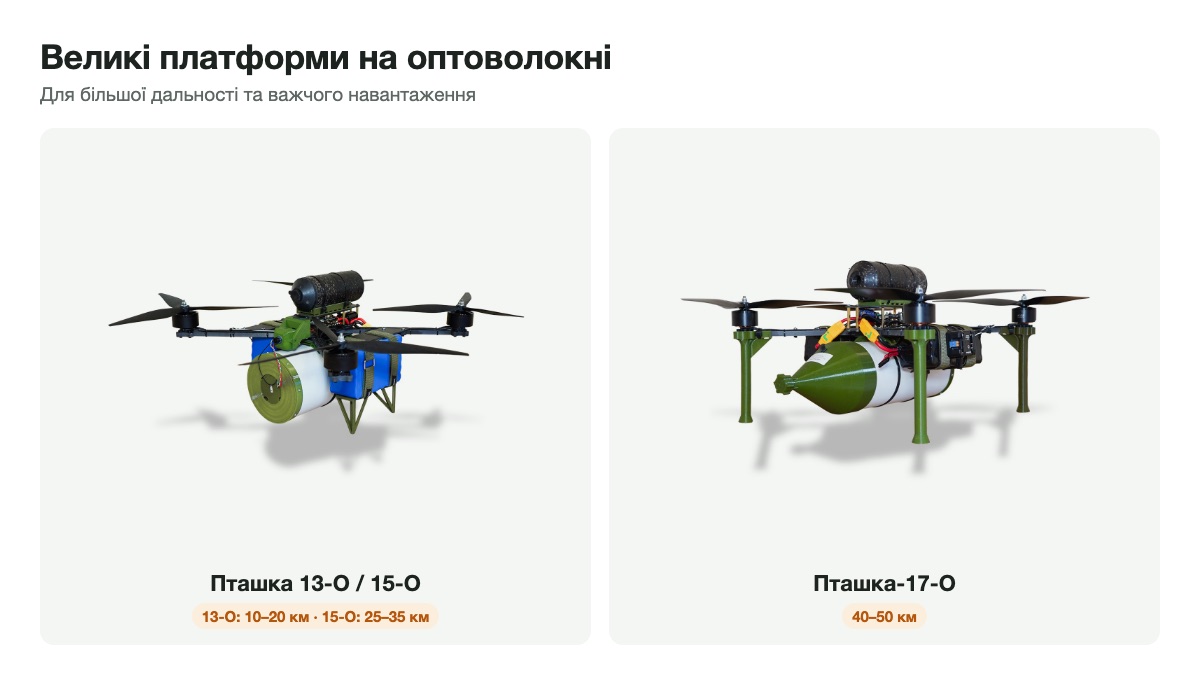
Ptashka-13-O and Ptashka-15-O
- Power system: A4320 500KV motors, F722 80A controller. 13-inch propellers on the 13-O and 15-inch on the 15-O.
- Camera: analog Caddx Ratel 2 1200 TVL or thermal 640×512.
- Battery: two packs, from 8s2p 10,000 mAh to 8s4p 20,000 mAh depending on version.
- Included: take-off and ambush legs.
Both models are sold in versions by spool length. A longer spool gives more range, while the payload changes:
| Version | Range | Battery | Payload |
|---|---|---|---|
| 13-O-10 km | 10 km | 2 × 8s2p | 3.5 kg |
| 13-O-15 km | 15 km | 2 × 8s2p | 3 kg |
| 13-O-20 km | 20 km | 2 × 8s3p | 3 kg |
| 15-O-25 km | 25 km | 2 × 8s3p | 2.5 kg |
| 15-O-30 km | 30 km | 2 × 8s4p | 3 kg |
| 15-O-35 km | 35 km | 2 × 8s4p | 1.5 kg |
Ptashka-17-O
- Power system: A5220 500KV motors, 17-inch propellers, F722 80A controller.
- Range and payload: 40 km with 2 kg or 50 km with 1.5 kg.
- Camera: analog Caddx Ratel 2, thermal 640×512 or digital Ptashka Full HD 60 FPS.
- Battery: two 8s5p packs of 27,500 mAh each.
- Included: Ptashka 50 km fibre-optic communication module and take-off and ambush legs.
The largest model in the line-up with the longest spool, for targets out of reach of the 13-O and 15-O.
Comparison table
| Ptashka-10 | Ptashka-15 | Ptashka-10-O | Ptashka-13-O | Ptashka-15-O | Ptashka-17-O | |
|---|---|---|---|---|---|---|
| Link | Radio | Radio | Fibre | Fibre | Fibre | Fibre |
| Propellers | 10″ | 15″ | 11″ | 13″ | 15″ | 17″ |
| Motors | 3115 900KV | 5215 500KV | A3115 900KV | A4320 500KV | A4320 500KV | A5220 500KV |
| Range | On request | Up to 50 km | 15–20 km | 10–20 km | 25–35 km | 40–50 km |
| Payload | On request | Up to 3 kg | 1.5 kg | 3–3.5 kg | 1.5–3 kg | 1.5–2 kg |
| Thermal camera | Night camera | No | Yes | Yes | Yes | Yes |
| Ambush legs | — | — | — | Yes | Yes | Yes |
| Ambush mode | Yes | Yes | Yes | Yes | Yes | Yes |
Starlink drone
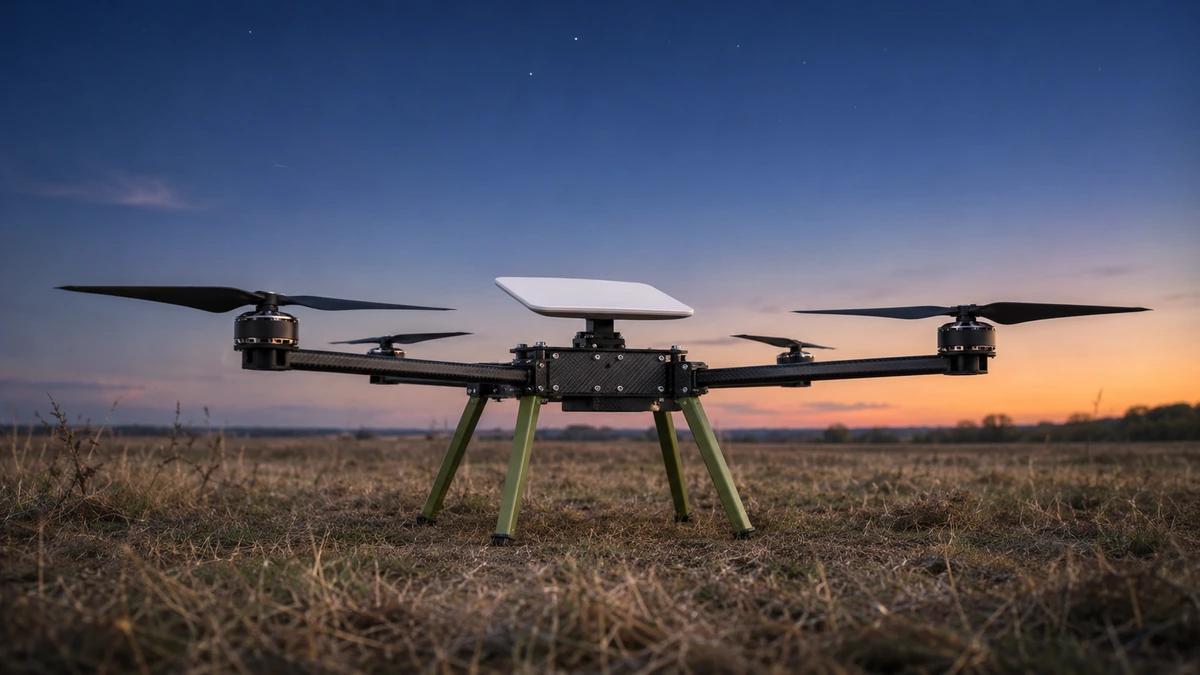
The Ptashka-17 Starlink sends control, telemetry and video via satellite. Range 50 km, flight time at least 50 minutes, payload 1.5 kg. How this link differs from radio and cable is explained in the Starlink drone article.
How to choose: four questions
- Does EW jam the radio link in your area? If so, choose fibre optics. If not, radio gives more freedom of manoeuvre without a cable.
- How far is the target? On fibre the spool sets the range: 10–20 km on the 13-O, 25–35 km on the 15-O and up to 50 km on the 17-O.
- What payload? The 13-O-10 km carries the most, 3.5 kg. Payload depends on the drone version; compare it in the table.
- When and how do you fly? Night missions need a thermal camera; see day or thermal camera for FPV. For ambushes choose models with legs; see fibre-optic FPV drone in an ambush.
Frequently asked questions
Which Ptashka FPV drone has the longest range?
On fibre, the Ptashka-17-O at up to 50 km. On radio, the Ptashka-15, also up to 50 km.
How does the Ptashka-10 differ from the Ptashka-10-O?
By the communication link. The Ptashka-10 is controlled by radio and the Ptashka-10-O by fibre optics, which EW cannot jam. The 10-O also has 11-inch propellers and can carry a thermal or digital Full HD camera.
How does the 13-O differ from the 15-O?
By propellers and range. The 13-O has 13-inch propellers and flies 10–20 km with up to 3.5 kg. The 15-O has 15-inch propellers and flies 25–35 km.
Which Ptashka FPV drones can have a thermal camera?
A 640×512 thermal camera is available on all fibre-optic models: 10-O, 13-O, 15-O and 17-O. The radio Ptashka-10 has a night camera.
What else does a fibre-optic drone need?
A fibre spool of the right length and a ground station. Both are in the fibre-optic catalogue.
Not sure which model your unit needs? Contact us and a Ptashka engineer will match the drone, spool and camera to your task.


Related posts
Fixed-wing UAV: what it is and how to choose
What a fixed-wing UAV and wing drone are, how they differ from multirotors, which tasks they suit and the specifications of the Ptashka PD-1.
Starlink drone: how it works
How a Starlink drone works, how a satellite link differs from radio and fibre optics, its limitations and what the Ptashka-17 Starlink can do.
Analog or digital video for FPV
How analog and digital FPV video differ: image quality, behaviour on a weak signal and microphone. What the Ptashka-10 and Ptashka-15 use and how to choose.
Drone-mounted net launcher: FPV or Mavic
Ptashka drone-mounted net launchers for FPV, Mavic, Autel and Matrice compared: net size, firing distance, weight, activation and compatibility.
Is there a detector for fibre-optic drones
Why an RF detector cannot see a fibre-optic FPV drone and what actually helps spot one: acoustic sensors, observation, reconnaissance drones and physical protection.
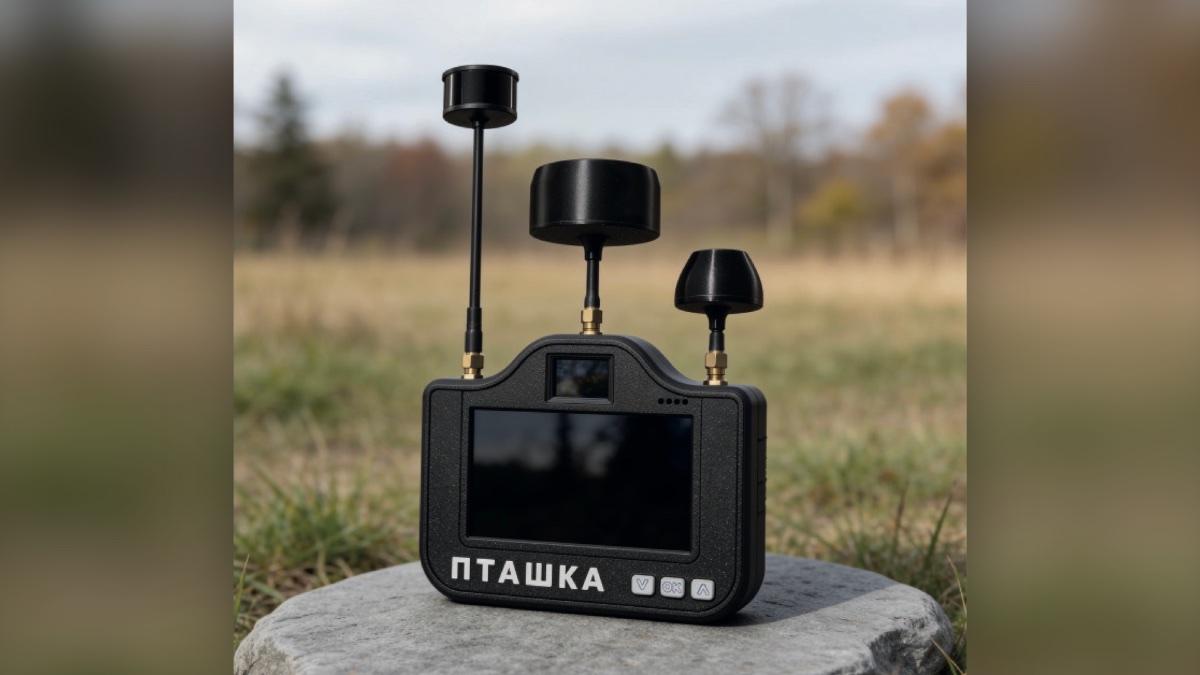
Which frequencies FPV drones use and what a detector sees
Which frequencies FPV drones use for control and video, which bands the Ptashka drone detector scans, and why it does not see DJI, digital video or fibre optics.
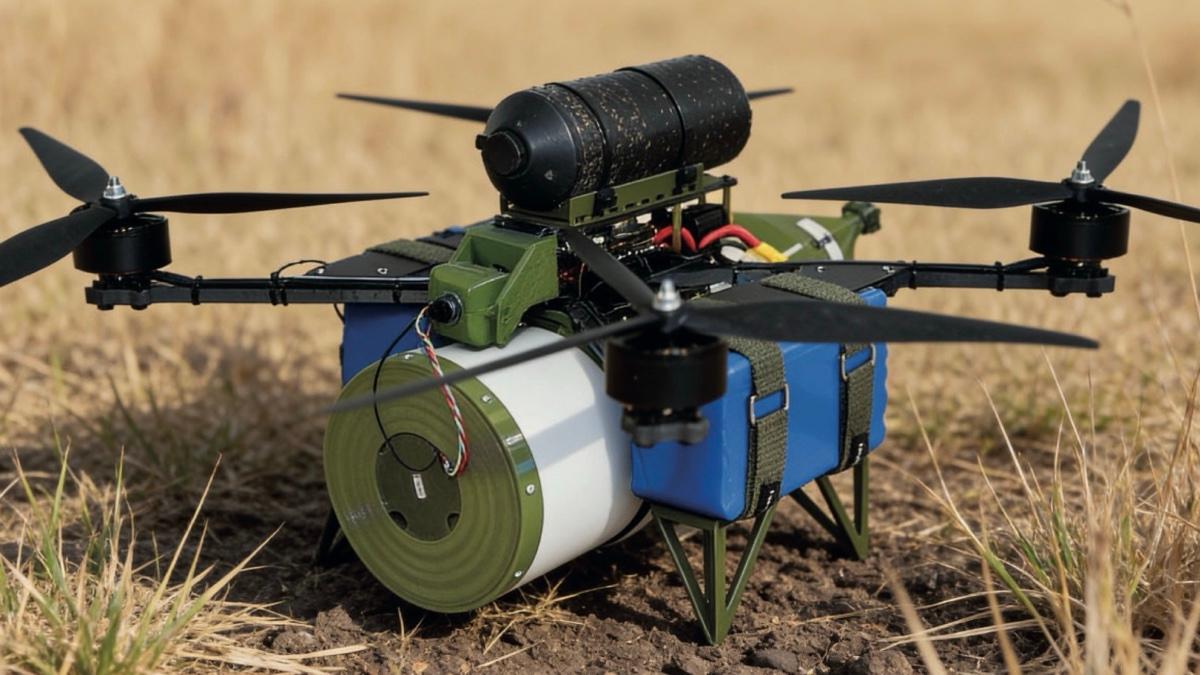
Fibre-optic FPV drone in an ambush: how it works and what the drone needs
How a fibre-optic FPV drone waits for a target in an ambush: ambush mode, landing legs, camera and spool. Suitable Ptashka models and how to protect against ambushes.
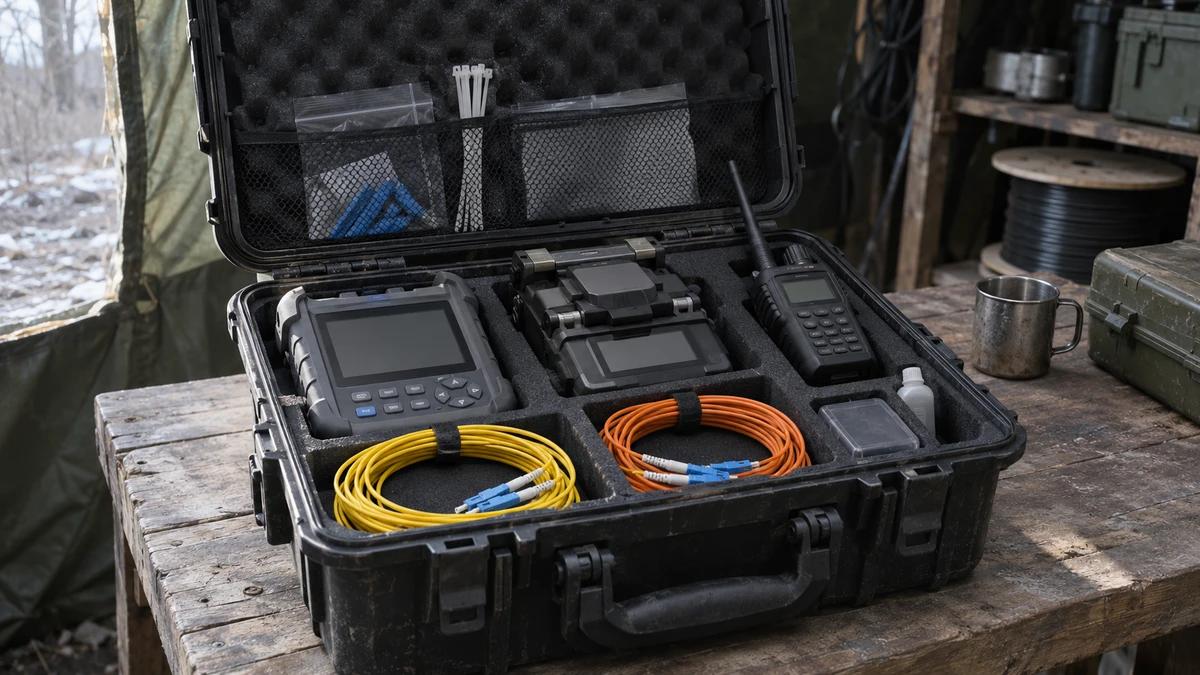
Analog or digital ground station for fibre-optic FPV drones
Analog and digital ground stations for fibre-optic FPV drones compared: kit contents, controller, microphone, video recording and accessories. How to choose.

How to choose a fibre-optic spool for an FPV drone: 10 to 50 km
How to choose fibre length for a fibre-optic FPV drone: 10, 15, 20, 25, 30, 35, 40 or 50 km, how to measure the route and which spool fits which drone.
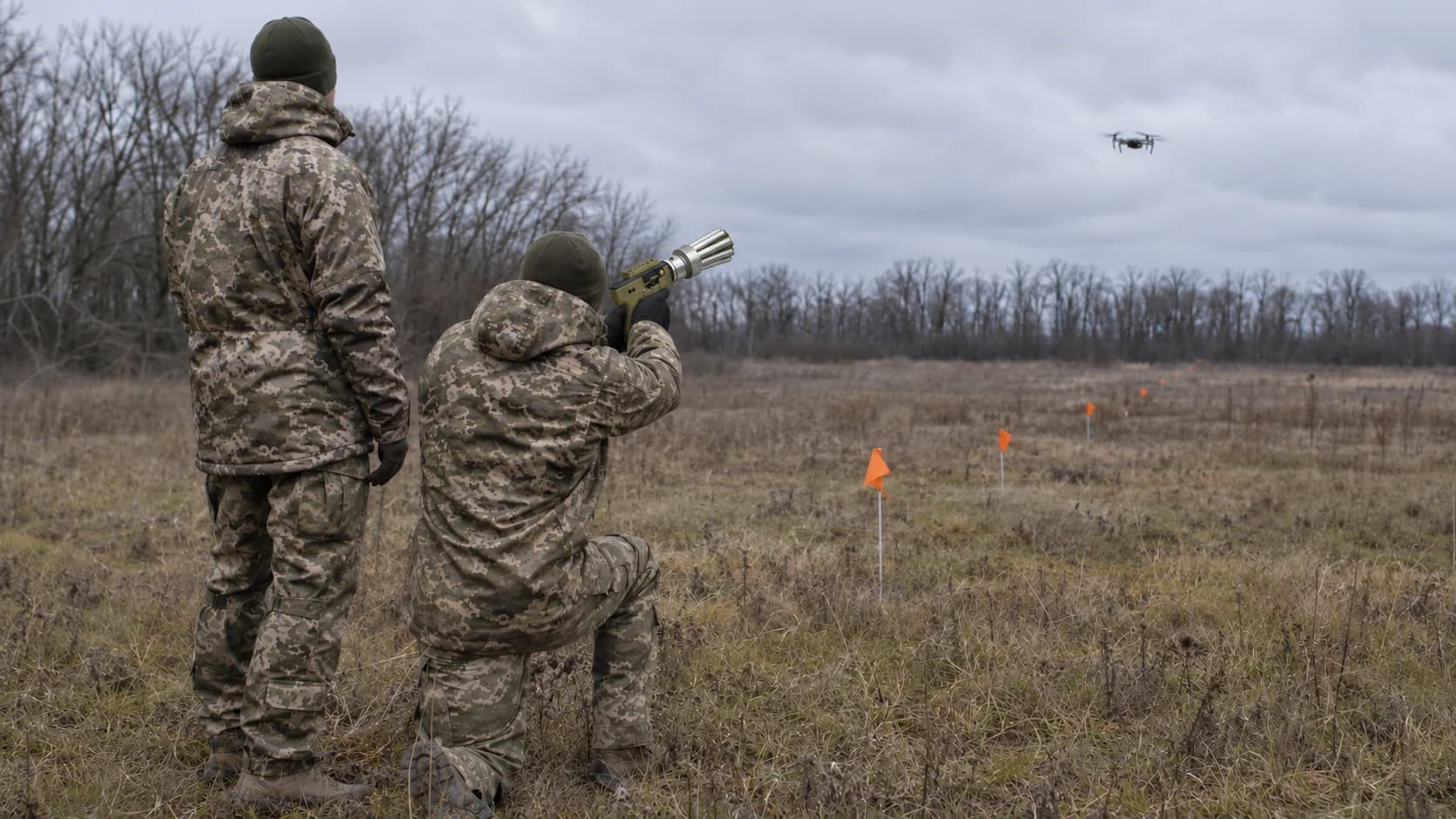
Handheld net launcher training
How to organise training with the Ptashka handheld net launcher: five stages, work with a training mock-up, exercise debriefs and cartridge records.
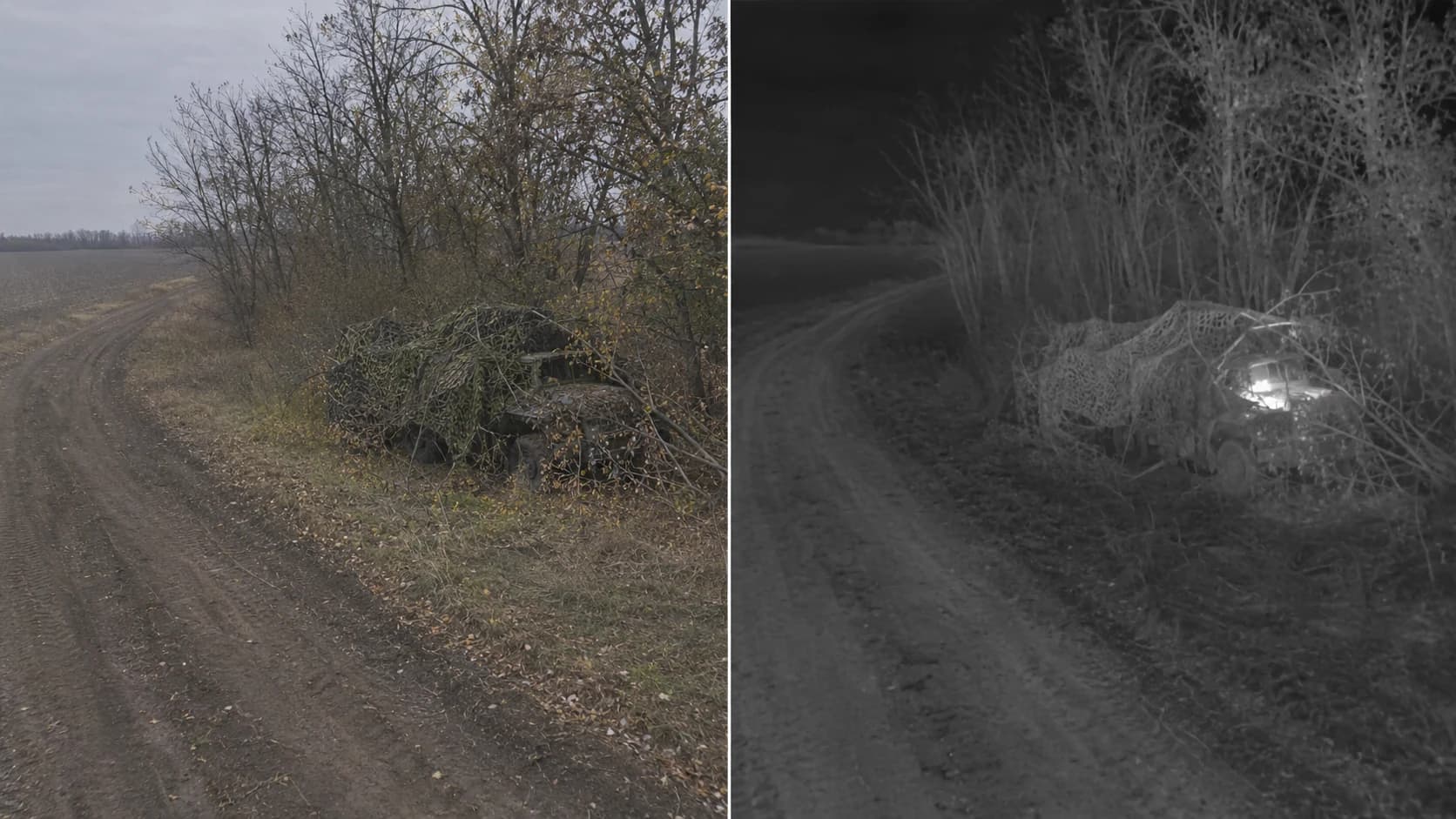
Day or thermal camera for FPV drones
Day and thermal FPV cameras compared by lighting, detail and limitations, with the camera options on Ptashka fibre-optic drones.
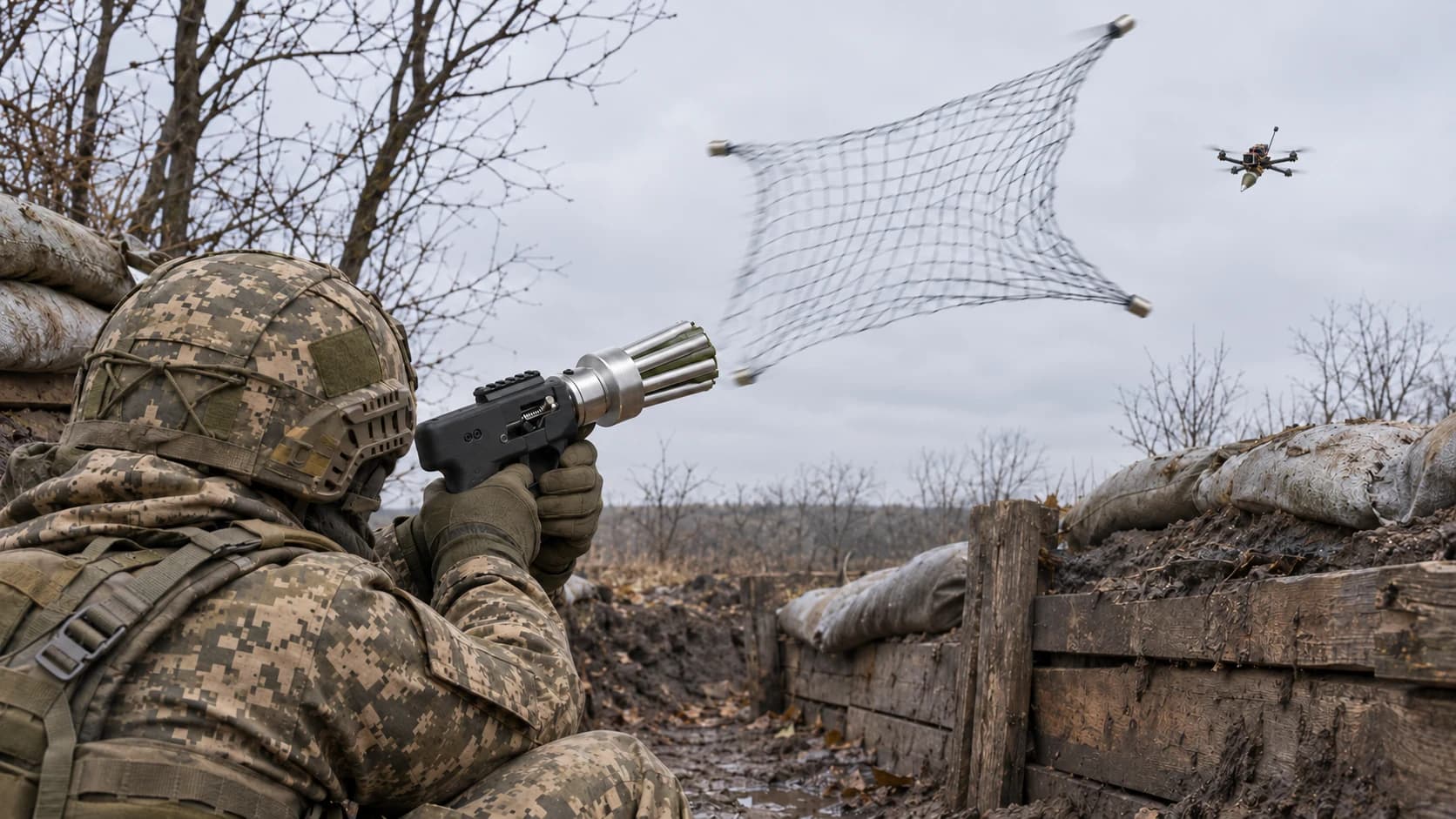
Handheld net launcher or shotgun against FPV drones
A handheld net launcher and a shotgun compared for FPV defence by weight, principle, shots and limitations, plus the Ptashka net gun kits.
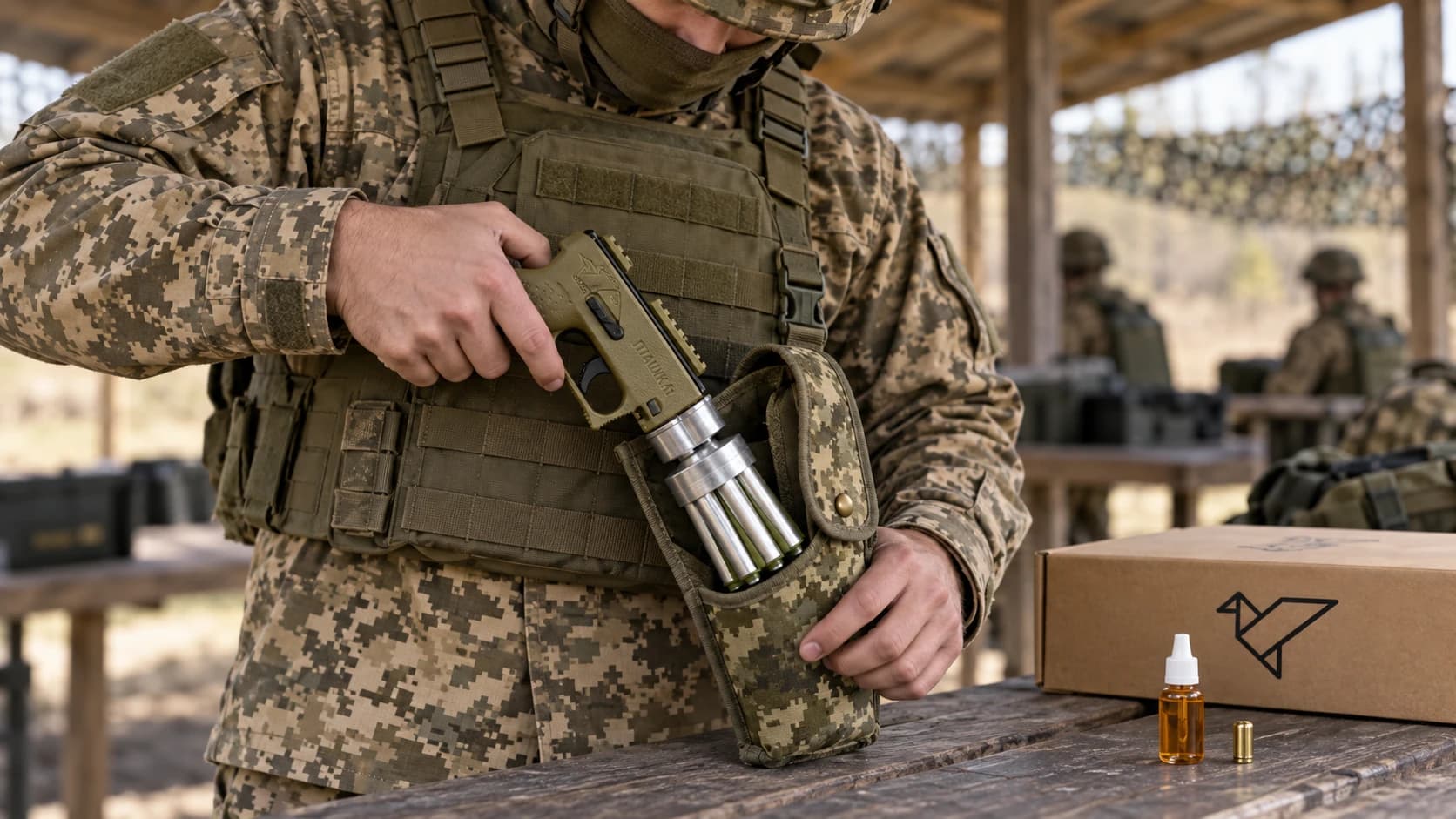
Choosing a handheld net launcher kit
Compare the confirmed contents of Ptashka Basic, Middle and Max handheld net launcher kits. Check the product version, documentation and indefinite free repair and service.
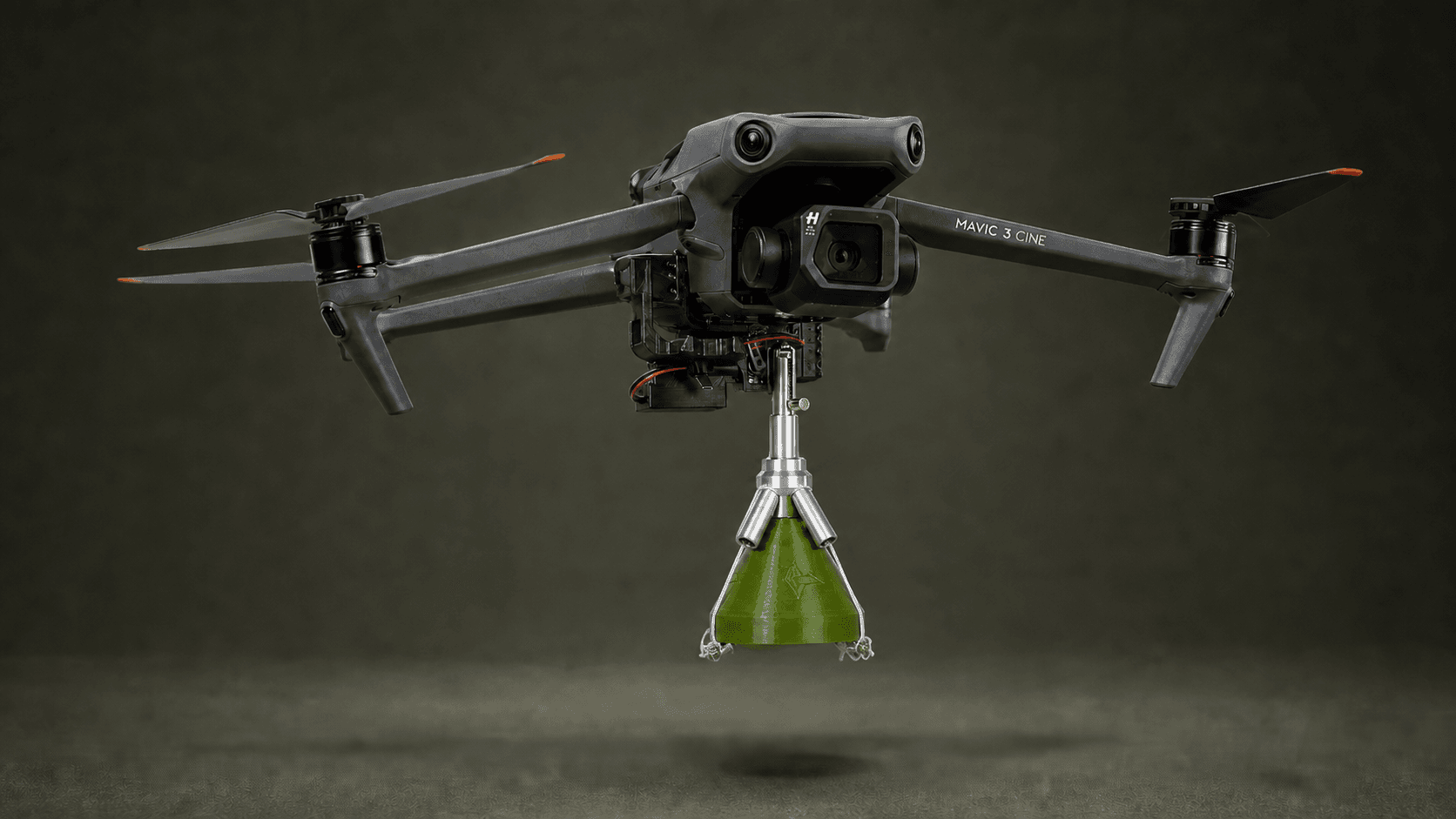
Mavic and Autel net launcher compatibility
Understand the distinction between a drone-carried net launcher and a handheld system. Confirm the precise Mavic, Autel or Matrice platform, version and supply before ordering.

FPV drone net launcher
How an FPV-carried net launcher differs from handheld and Mavic formats. Check the precise platform, module version, supplied contents and documented limitations.
RF detection, electronic warfare and physical protection
Understand the differences between analog RF reception, radio-electronic countermeasures and physical interception, including the limits of Ptashka’s detector and net launchers.
RF detectors for teams, facilities and vehicles
Compare portable detector requirements for teams, facilities and vehicles without assuming universal coverage. Understand the analog-only Ptashka receiver and its limits.
Common FPV drone formats
Compare radio-linked and fibre-optic FPV formats by compatible equipment, complete supply contents, documentation and support rather than an unsupported popularity ranking.
How a fibre-optic FPV drone works
The roles of the optical channel, spool, airborne and ground equipment. Learn why fibre length is not guaranteed flight range and what to confirm before ordering.
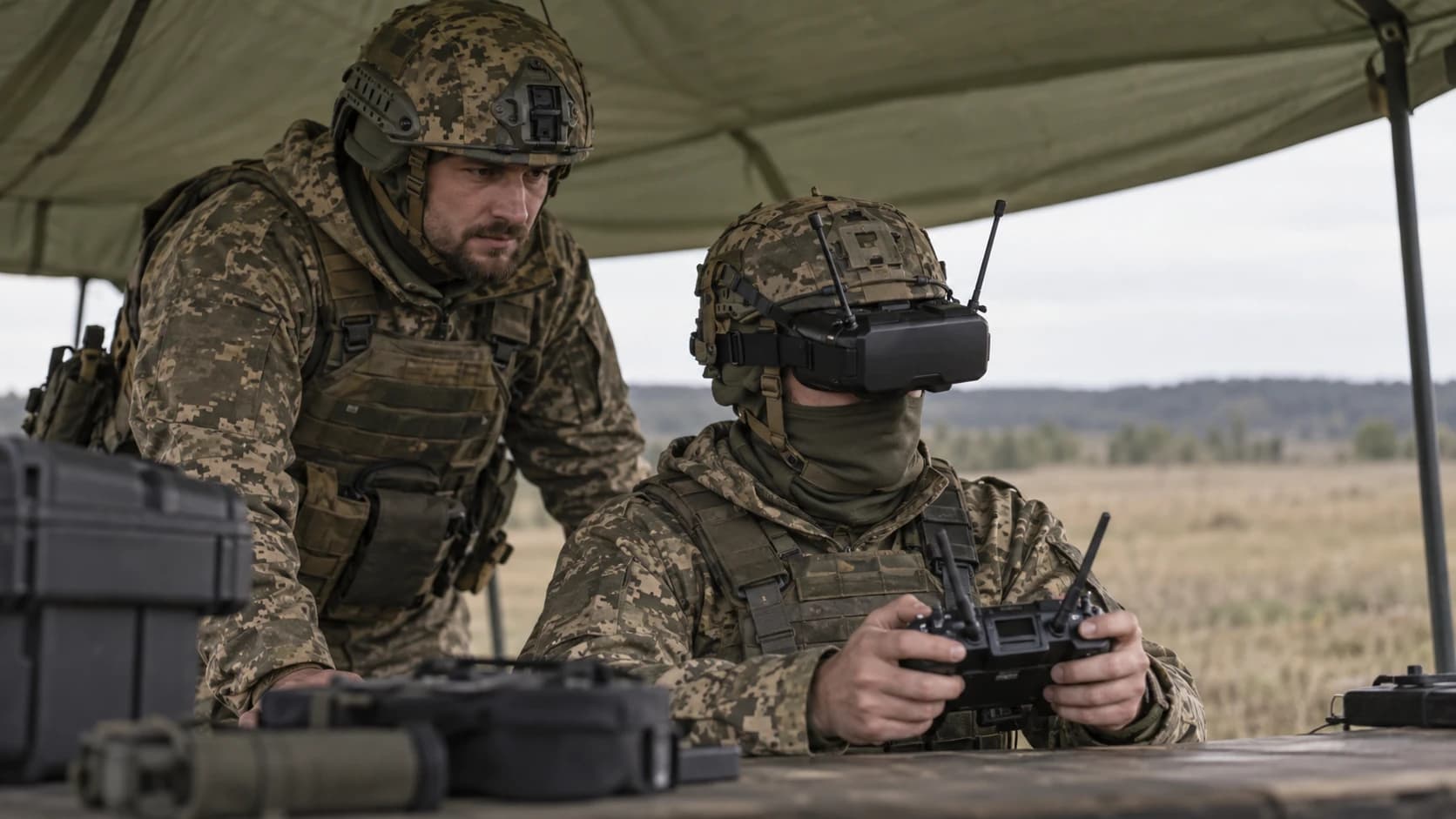
Choosing an FPV drone
Check the aircraft version, controller and video compatibility, included equipment, power specifications, documentation and support before ordering an FPV drone.
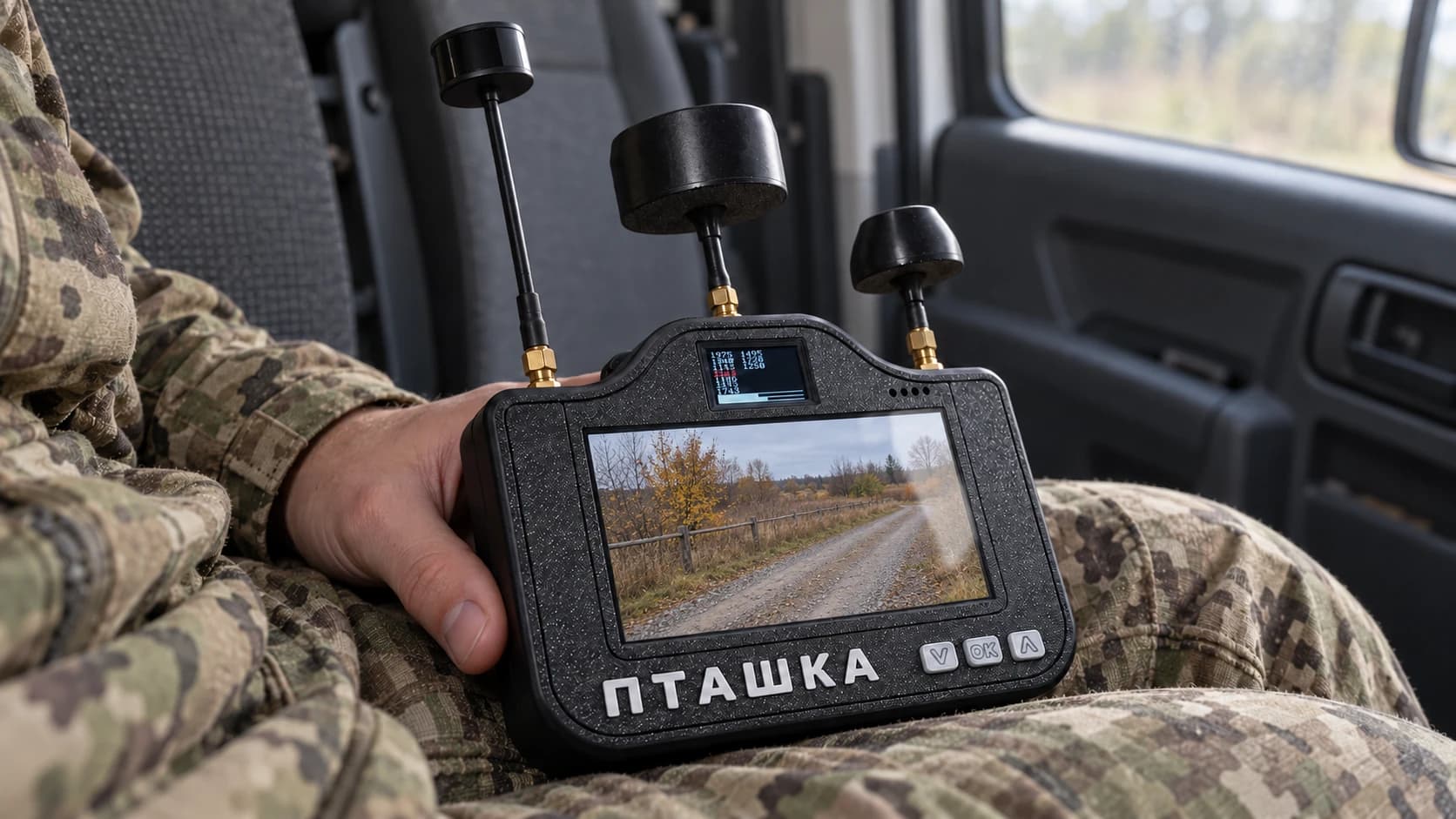
An RF detector in a UAV detection system
How a portable RF detector contributes information to a wider UAV detection process, what Ptashka’s analog-only receiver can show, and why its limits matter.
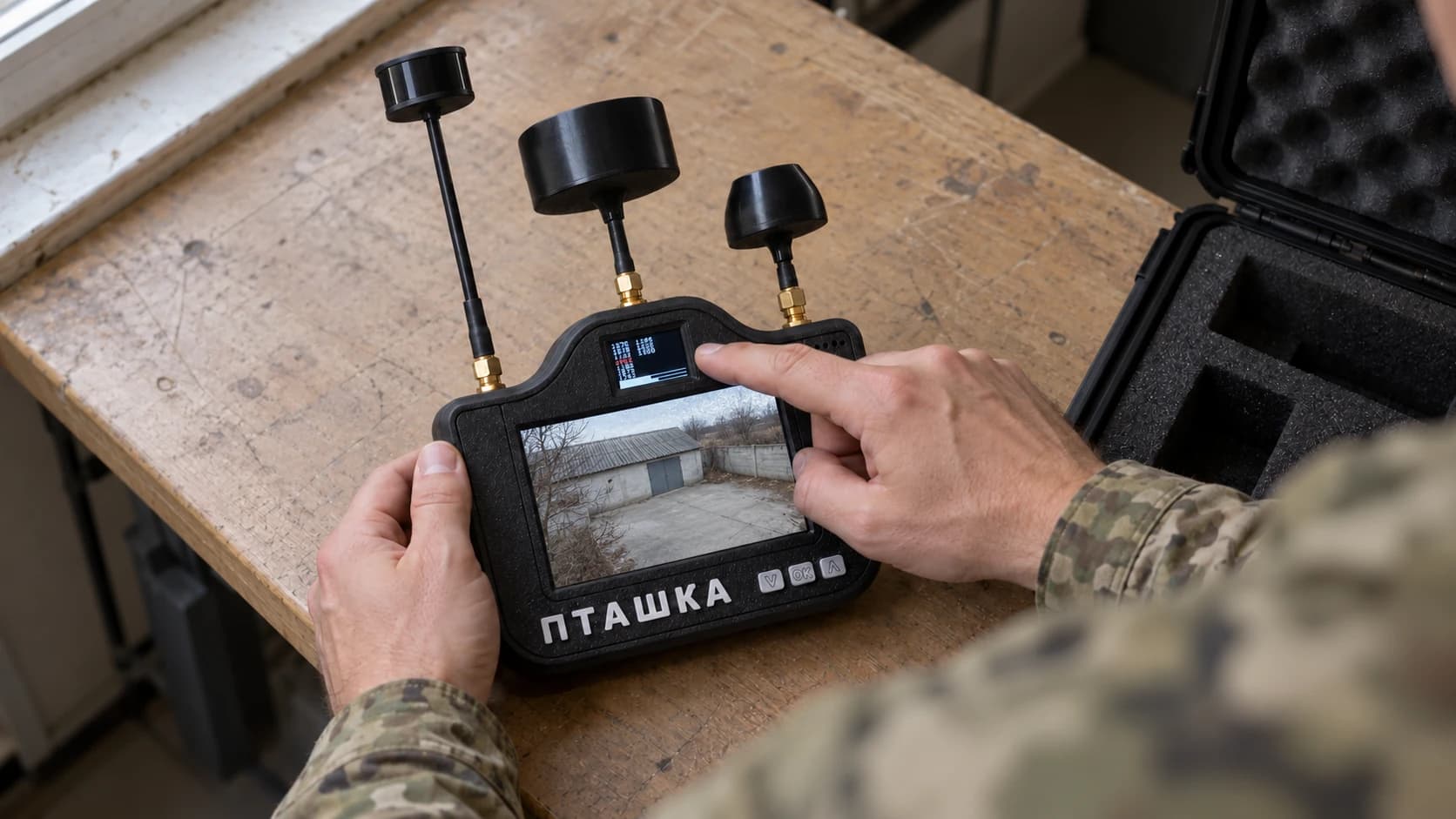
What an RF drone detector can and cannot do
Distinguish supported RF reception and analog video from aircraft identification, coordinates and universal detection. A practical explanation of Ptashka’s limits.
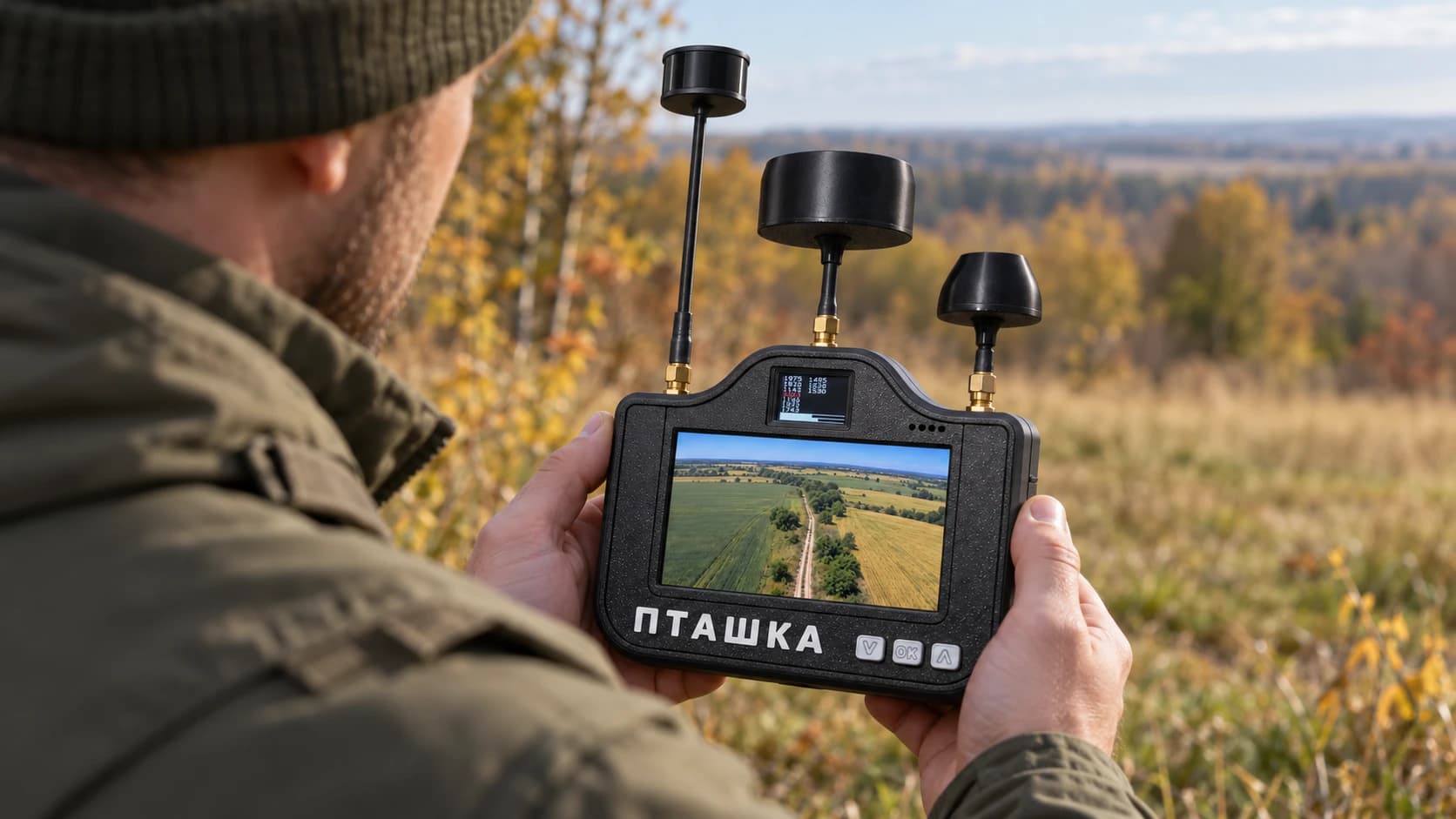
Choosing a portable drone detector
Compare supported signals, frequency bands, displays, battery specifications and support before buying a portable drone detector. Understand Ptashka’s analog-only scope.
What is a fibre-optic drone?
Understand how fibre-optic FPV differs from a radio link, the roles of the airborne and ground parts, and why fibre length does not guarantee flight range.
What is an FPV drone?
An introduction to First Person View drones: the camera, video link, viewing equipment and control functions, with the differences between radio and fibre-optic formats.