Handheld net launcher or shotgun against FPV drones: what to choose for infantry
05.11.2026
By Ptashka Drones Editorial Team
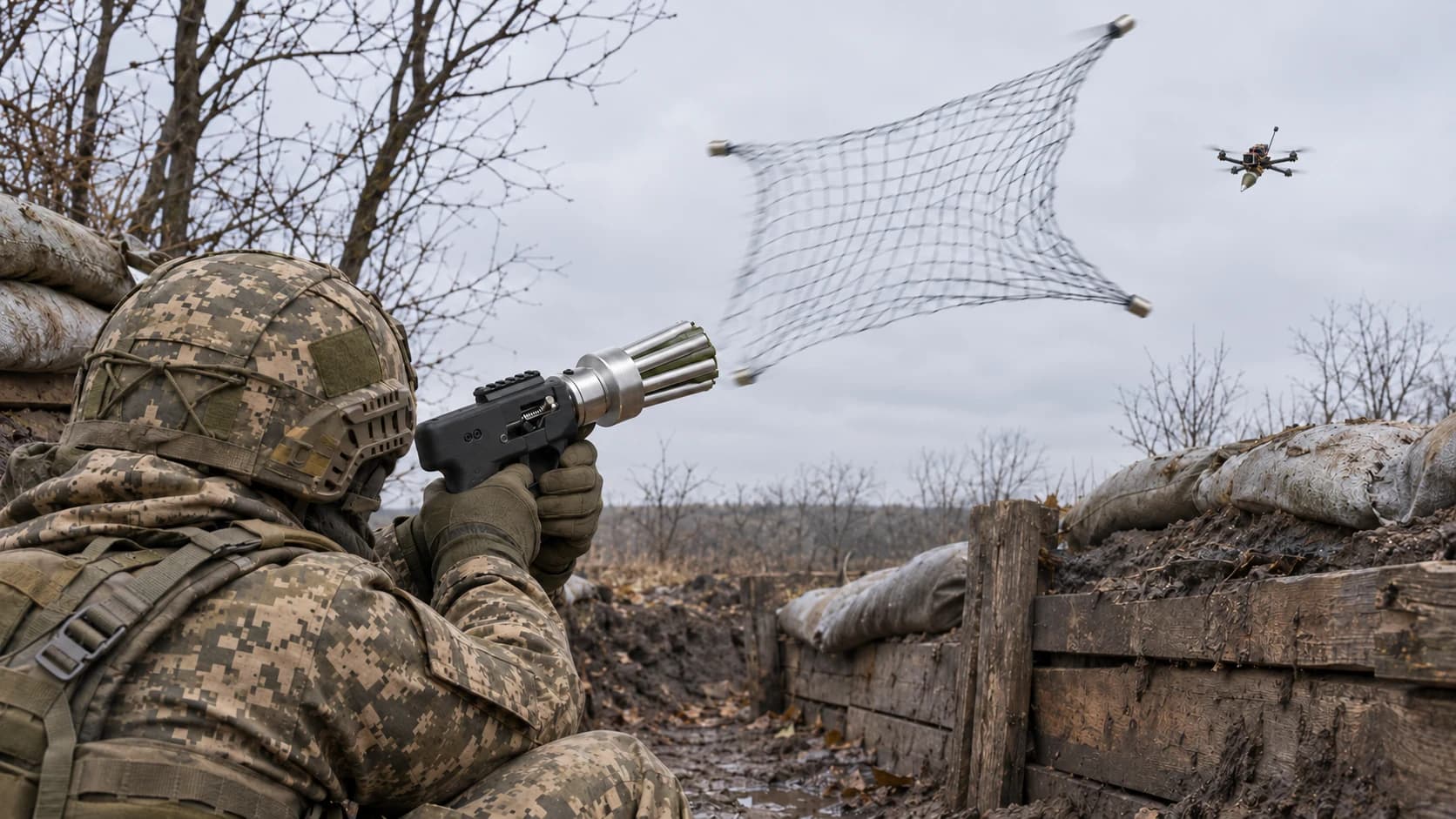
Shotguns and handheld net launchers are both used for physical defence against FPV drones. A shotgun can fire several shots without reloading, depending on the model. The Ptashka handheld net launcher (net gun) weighs about 1 kg and fits in a holster. The choice depends on crew training, unit equipment and the role the tool has to play.
How each tool works
A shotgun fires a pattern of shot. The result depends on the model, the cartridge and the conditions. There is no single effective range against FPV drones for all such combinations.
A handheld net launcher fires a net from a replaceable cartridge. If the net covers the drone, it can block the propellers. For the handheld Ptashka the manufacturer specifies a 3.7 × 3.7 m net, a maximum firing range of up to 30 m and full net opening at about 15 m. These figures describe the device; the chance of an interception depends on the specific conditions.
Comparison by key parameters
| Parameter | Ptashka handheld net launcher | Shotgun |
|---|---|---|
| Principle | Net from a replaceable cartridge | Pattern of shot |
| Range | Up to 30 m per the manufacturer. Full net opening at about 15 m | Depends on model, cartridge and conditions |
| Shots without reloading | One per cartridge | Depends on model and magazine capacity |
| Weight and carry | About 1 kg, carried in a holster | Depends on model and gear |
| Fibre-optic drones | Physical effect independent of the control link | Physical effect independent of the control link |
A fibre-optic control link resists radio jamming of the link itself. Both net and shot act physically, so the link type alone does not decide the outcome of an interception.
When a handheld net launcher makes sense
A net launcher fits when a unit needs a compact additional close-defence tool. It weighs about 1 kg, is carried in a holster and uses one replaceable cartridge per shot. When buying, assess the weight of the full kit, the cartridge reserve and service availability separately.
When a shotgun makes sense
A shotgun is considered when the unit already has suitable weapons, ammunition and trained personnel. Several consecutive shots depend on the specific model. Ukraine's Ministry of Defence describes counter-UAV training in the Land Forces basic training programme.
Limits of physical interception
The result depends on the drone's speed and trajectory, visibility and the moment it was spotted. A damaged drone can keep moving by inertia. A fall also does not mean a dangerous payload has been neutralised. The maximum firing range does not define a safe distance.
How detection and physical defence fit together
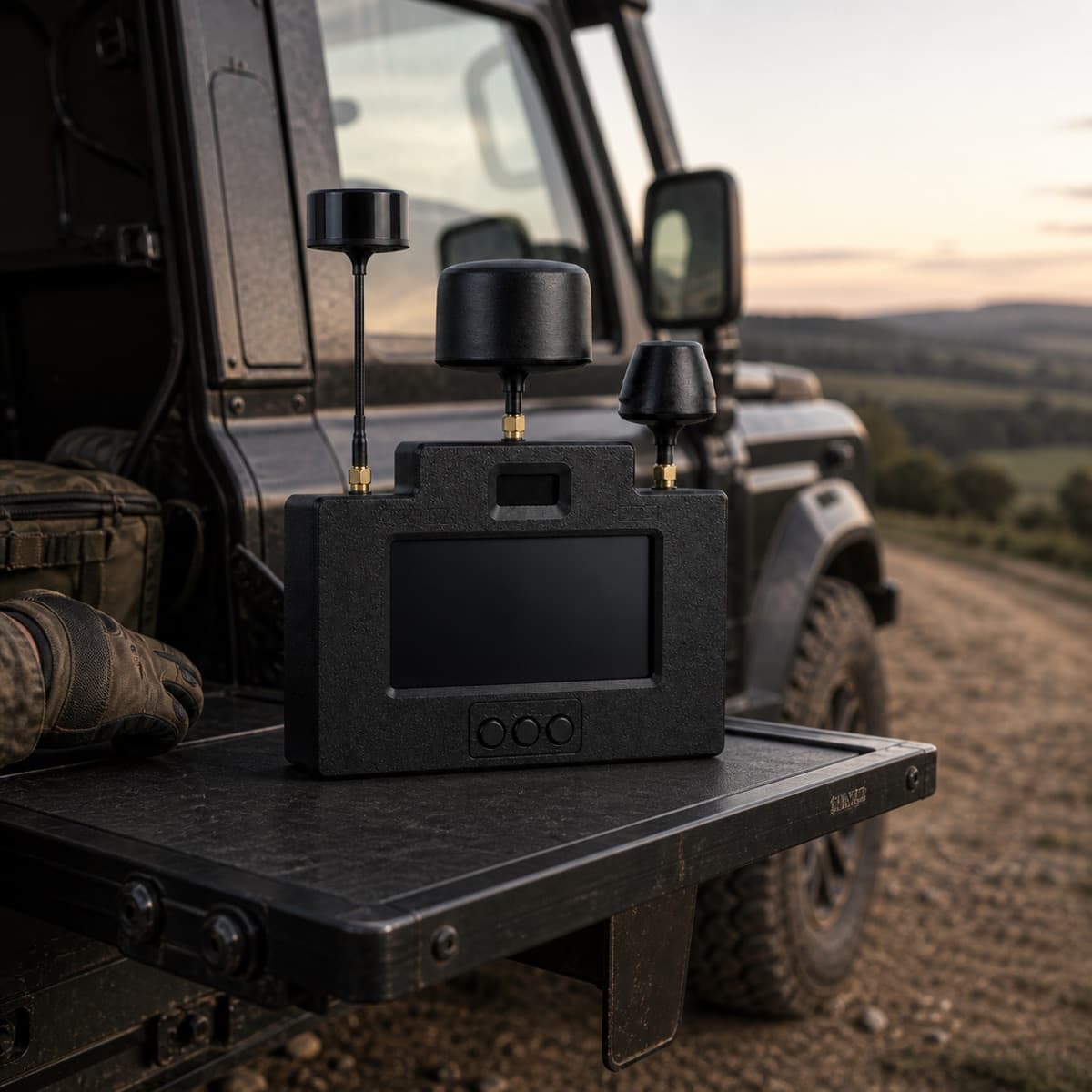
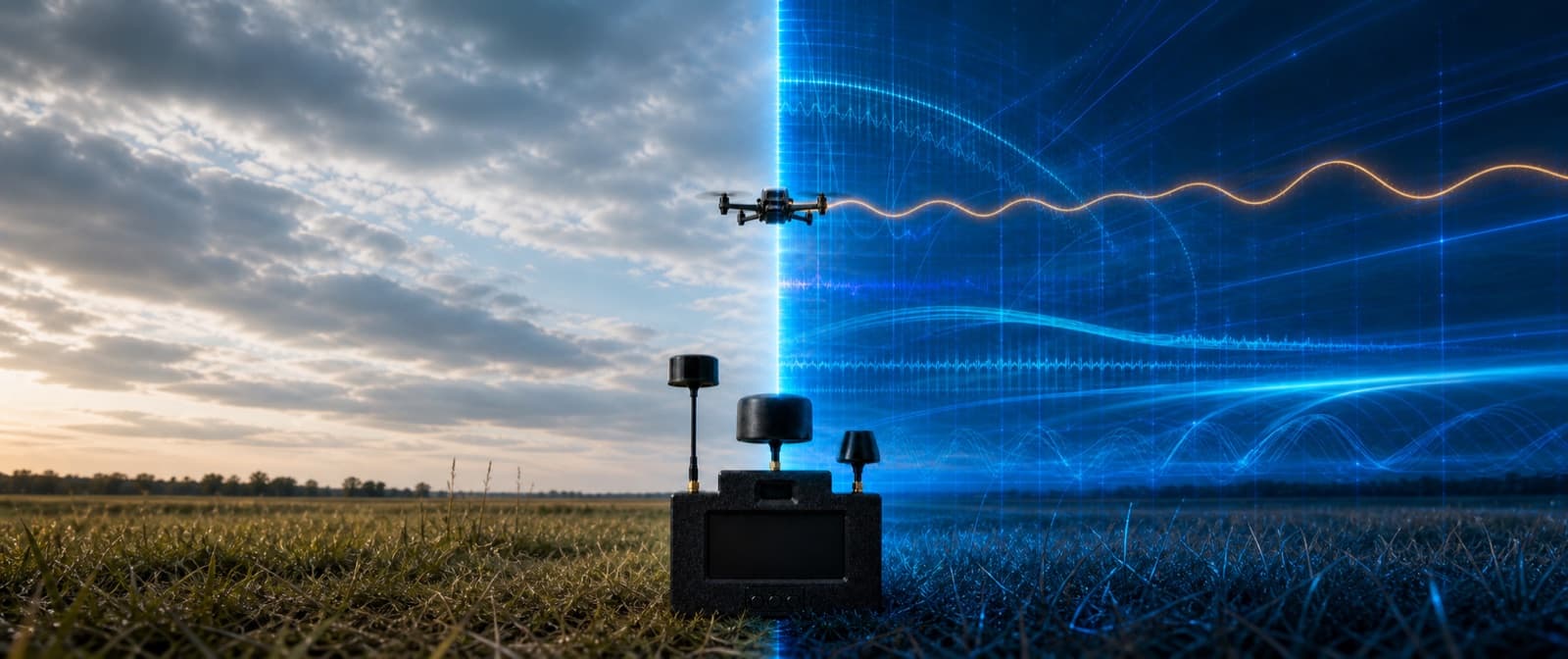
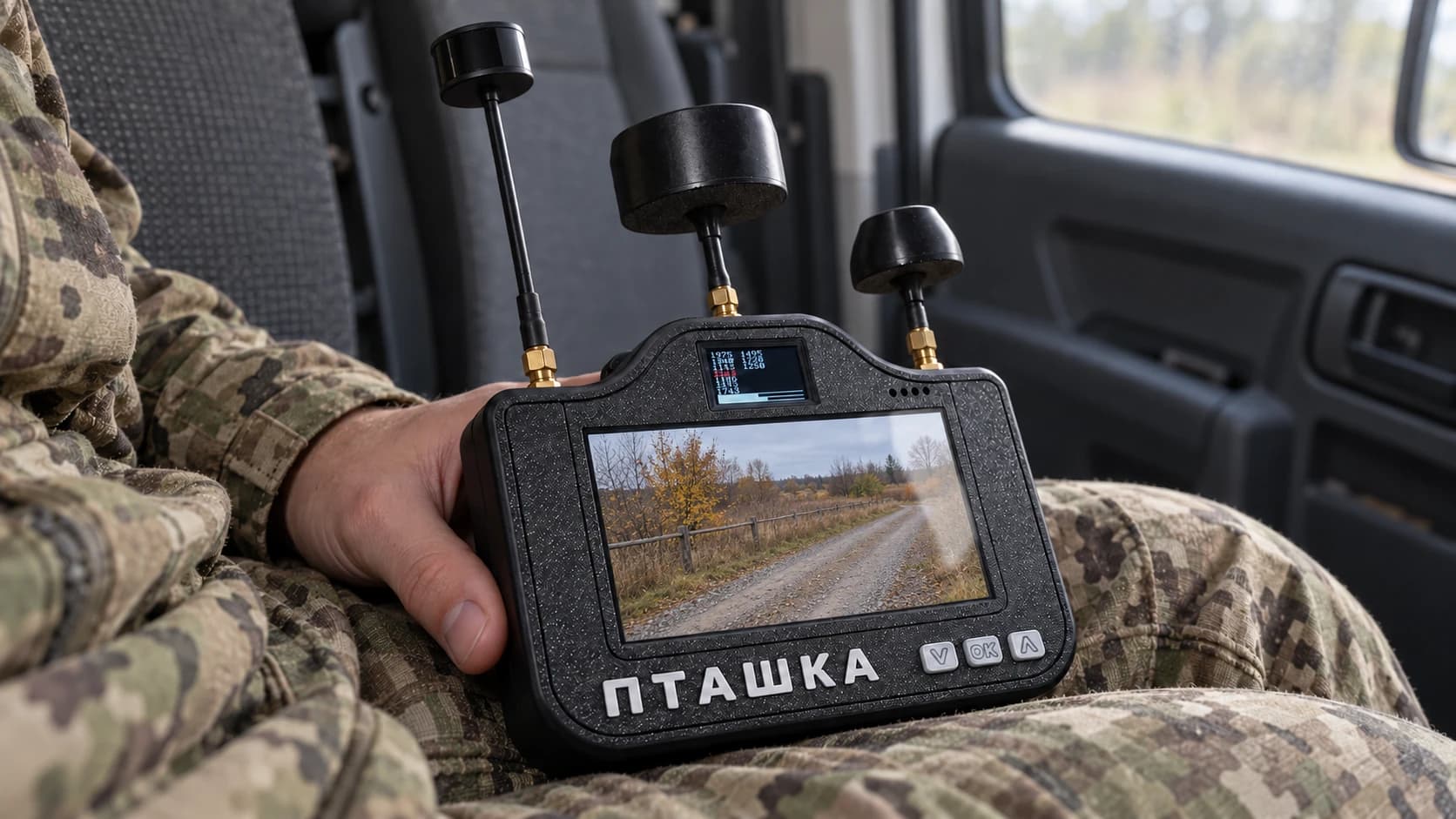
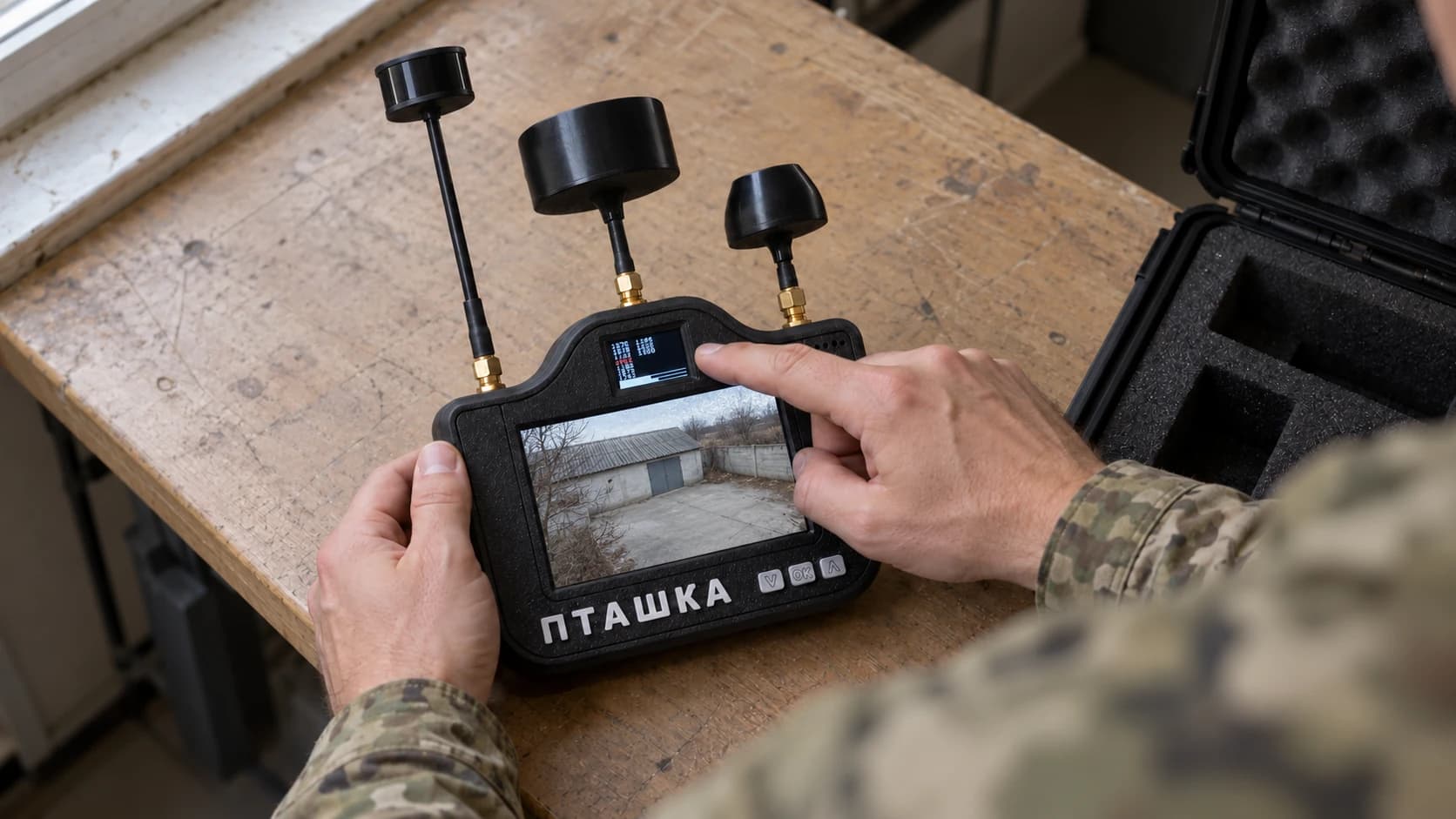
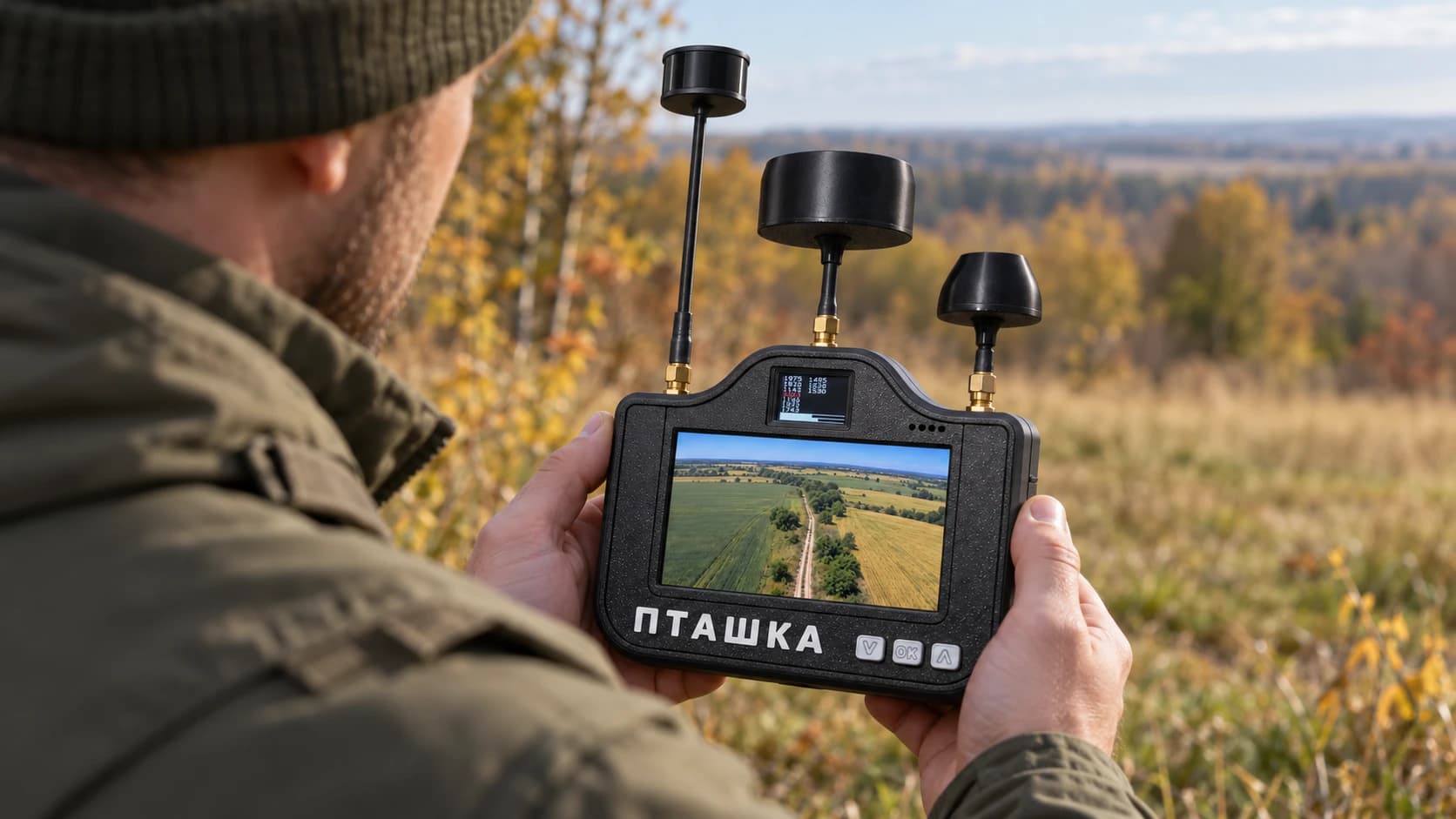
The Ptashka detector can register analog video signals in its supported bands. It does not detect a fibre-optic control link itself. The net launcher, the shotgun and the detector each play a different role in a defence system. More on these roles and on electronic warfare in RF detector, EW and physical protection against FPV.
Which handheld net launcher kit to choose
Ptashka handheld net launcher kits differ in cartridge reserve and accessories. The current contents of each kit are listed on its page.
- Basic kit with one cartridge.
- Medium kit with five cartridges.
- Maximum kit with seven cartridges and an extra barrel section.
Ptashka handheld net launchers come with free lifetime repair and service. A detailed kit comparison is in how to choose a handheld net launcher against FPV and compare kits.
Frequently asked questions
Does a net launcher depend on how the FPV drone is controlled?
The net acts physically, so it does not depend on a radio or fibre-optic link. The result is decided by the drone and the interception conditions.
What range does the manufacturer specify?
For the handheld Ptashka the maximum firing range is up to 30 m. The net fully opens at about 15 m. Manufacturer specifications.
How many shots can one net launcher fire?
The net launcher is reusable; each shot uses one replaceable cartridge. The reserve depends on the kit.
To confirm kit contents and supply terms for your unit, contact Ptashka Drones.


Related posts
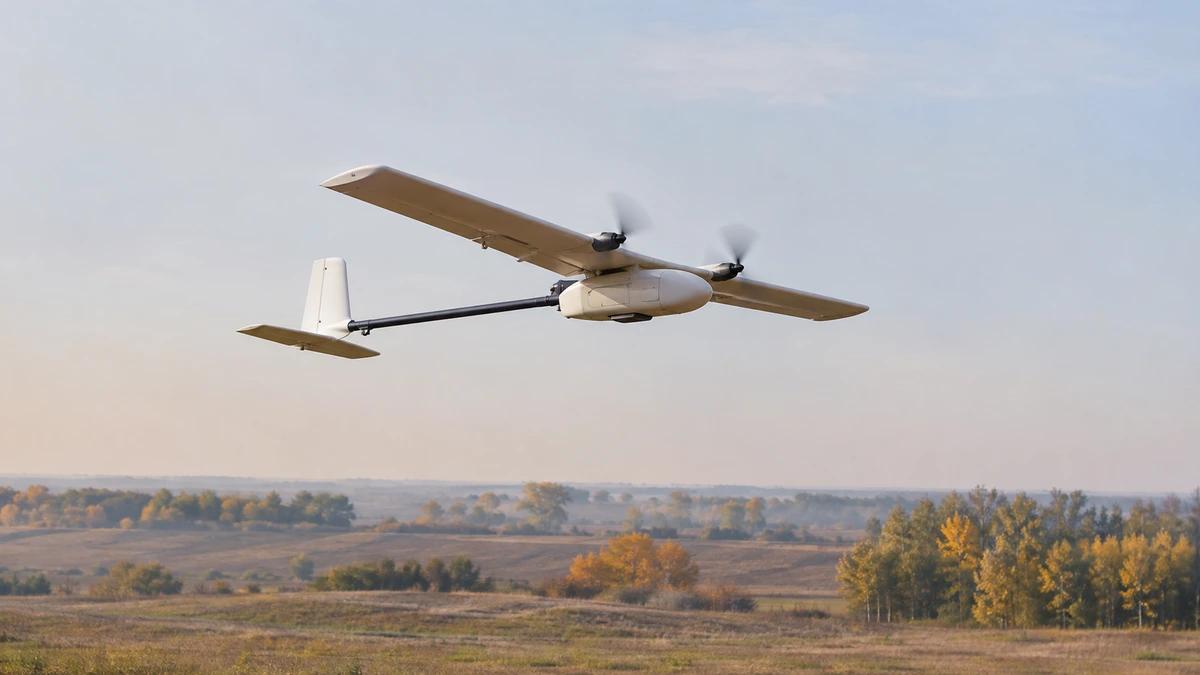
Fixed-wing UAV: what it is and how to choose
What a fixed-wing UAV and wing drone are, how they differ from multirotors, which tasks they suit and the specifications of the Ptashka PD-1.
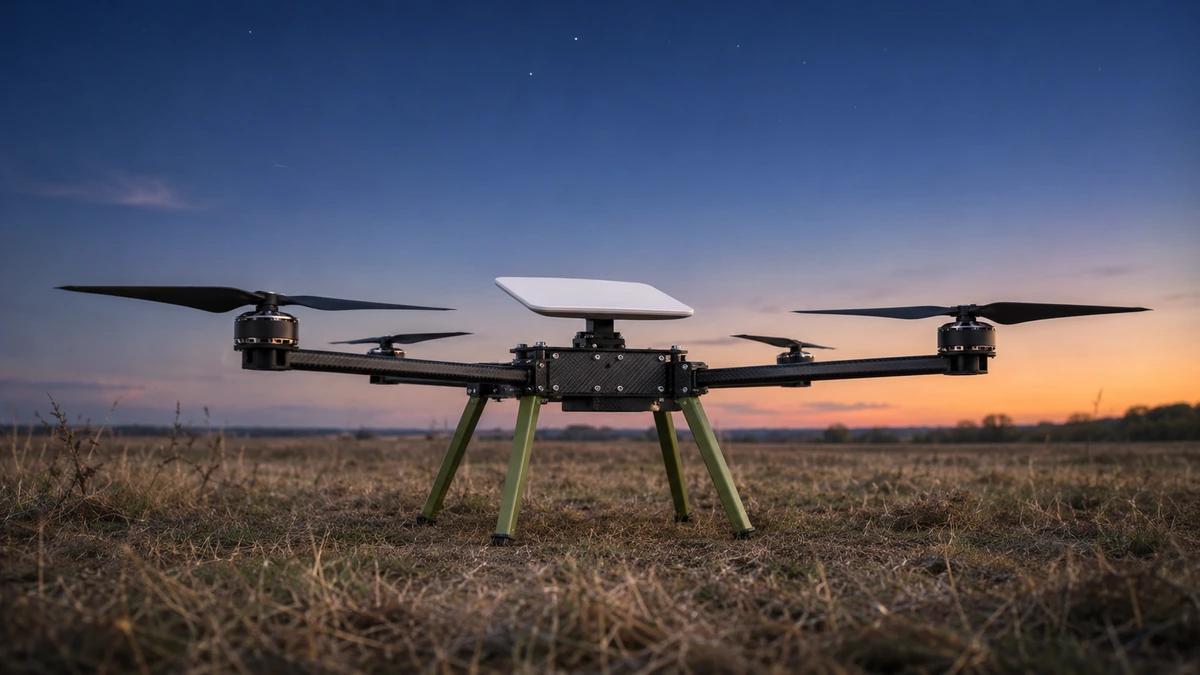
Starlink drone: how it works
How a Starlink drone works, how a satellite link differs from radio and fibre optics, its limitations and what the Ptashka-17 Starlink can do.
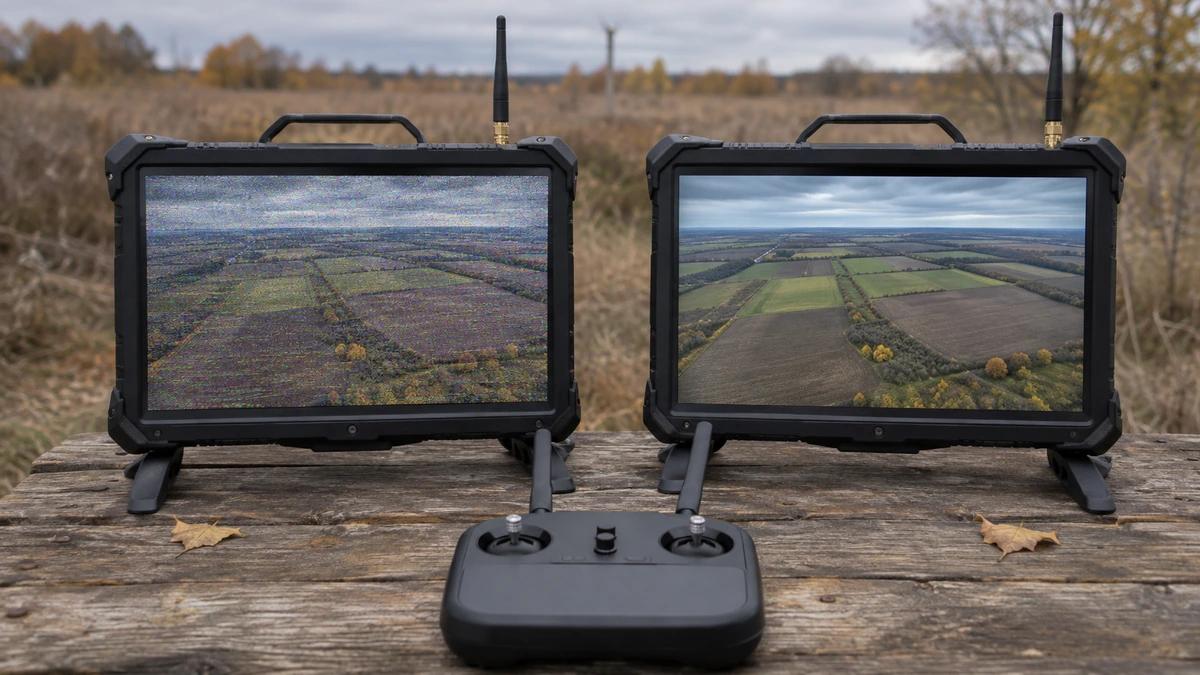
Analog or digital video for FPV
How analog and digital FPV video differ: image quality, behaviour on a weak signal and microphone. What the Ptashka-10 and Ptashka-15 use and how to choose.
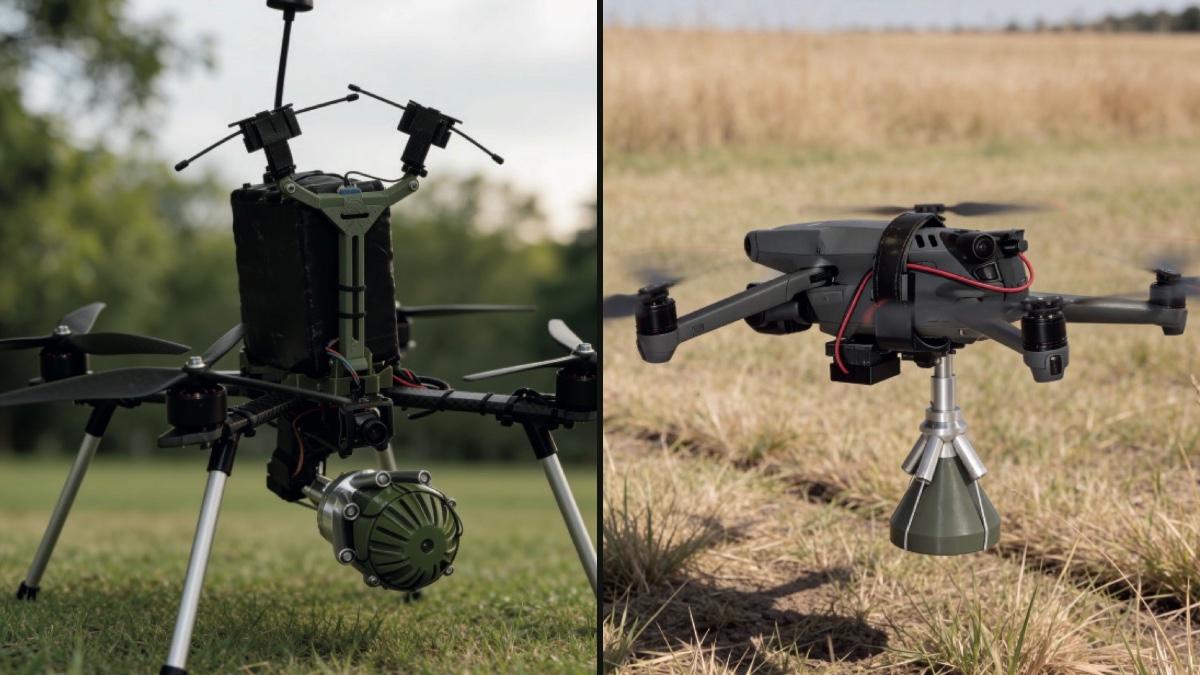
Drone-mounted net launcher: FPV or Mavic
Ptashka drone-mounted net launchers for FPV, Mavic, Autel and Matrice compared: net size, firing distance, weight, activation and compatibility.
Is there a detector for fibre-optic drones
Why an RF detector cannot see a fibre-optic FPV drone and what actually helps spot one: acoustic sensors, observation, reconnaissance drones and physical protection.
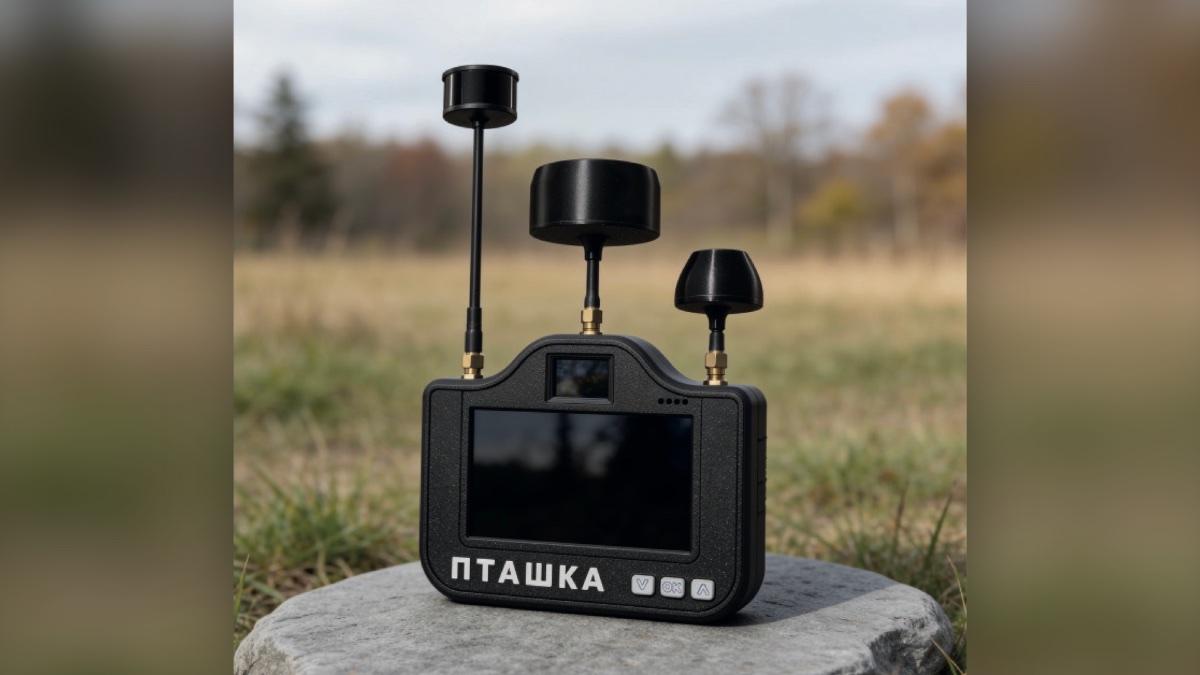
Which frequencies FPV drones use and what a detector sees
Which frequencies FPV drones use for control and video, which bands the Ptashka drone detector scans, and why it does not see DJI, digital video or fibre optics.
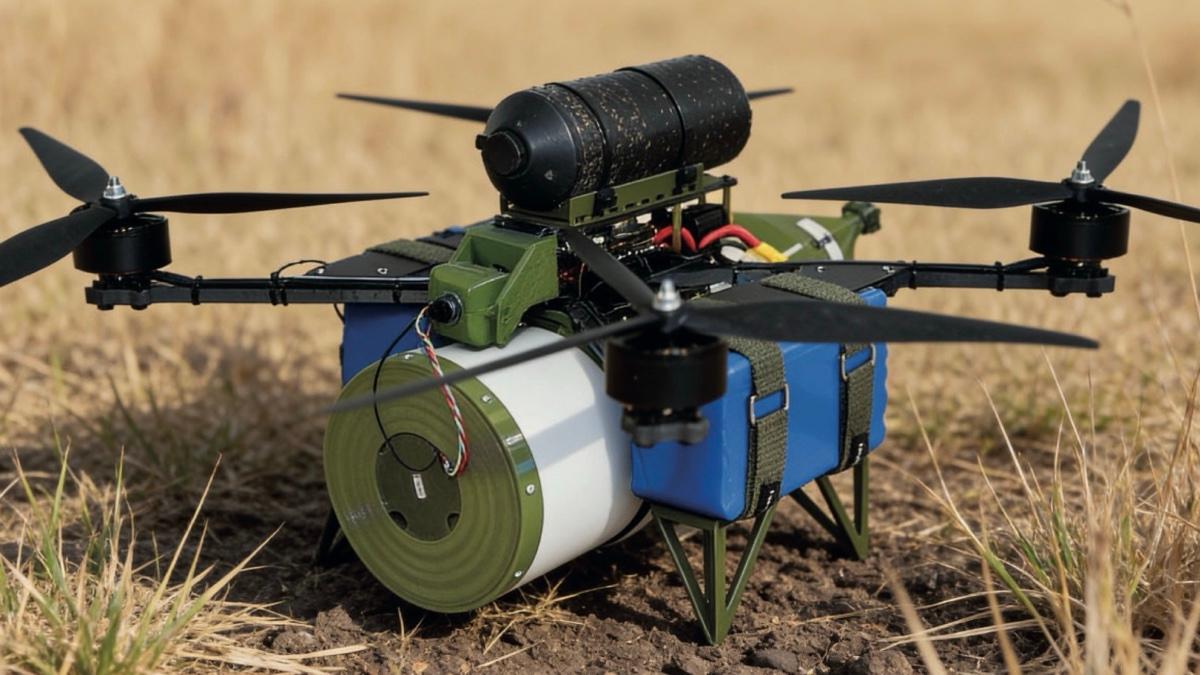
Fibre-optic FPV drone in an ambush: how it works and what the drone needs
How a fibre-optic FPV drone waits for a target in an ambush: ambush mode, landing legs, camera and spool. Suitable Ptashka models and how to protect against ambushes.
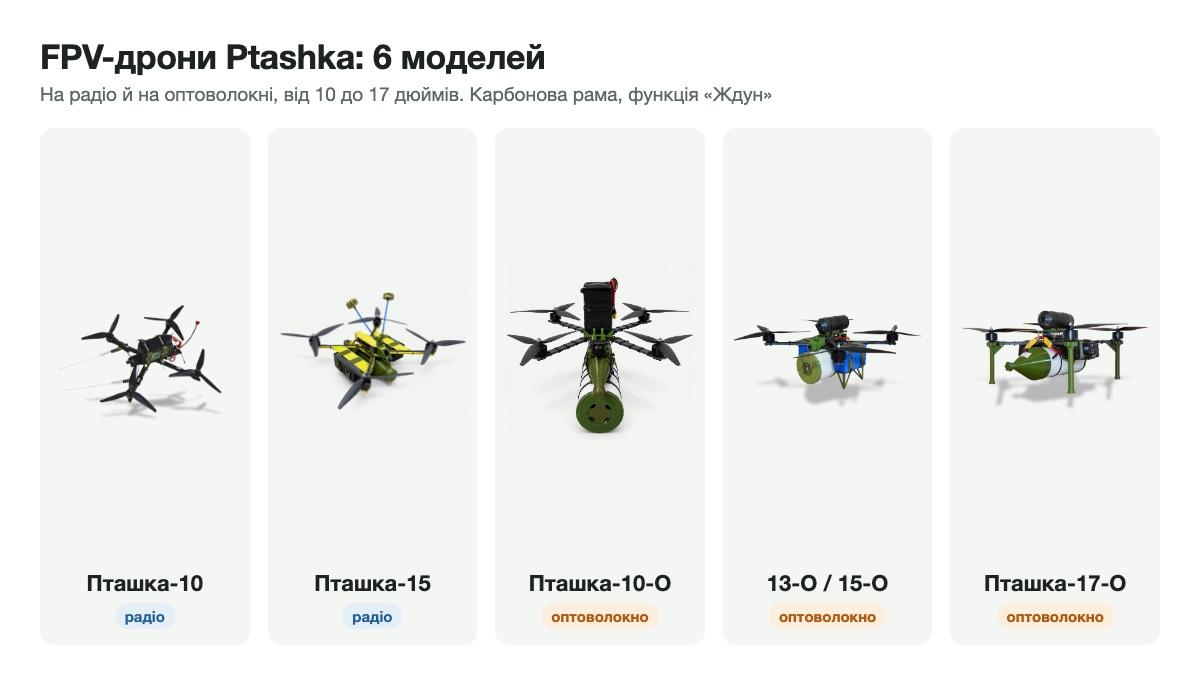
Which Ptashka FPV drone to choose: radio and fibre-optic models compared
Ptashka FPV drones compared: radio, fibre-optic and Starlink models 10, 15, 10-O, 13-O, 15-O, 17-O. Propellers, motors, cameras, range, payload and ambush mode.
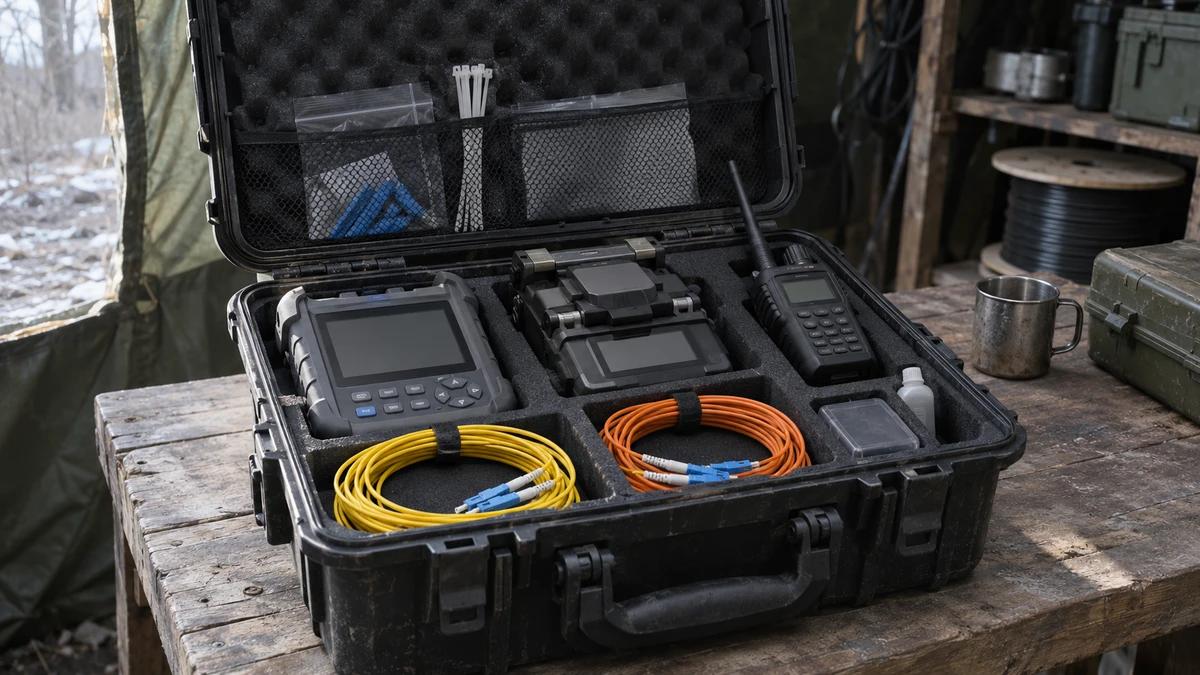
Analog or digital ground station for fibre-optic FPV drones
Analog and digital ground stations for fibre-optic FPV drones compared: kit contents, controller, microphone, video recording and accessories. How to choose.
How to choose a fibre-optic spool for an FPV drone: 10 to 50 km
How to choose fibre length for a fibre-optic FPV drone: 10, 15, 20, 25, 30, 35, 40 or 50 km, how to measure the route and which spool fits which drone.
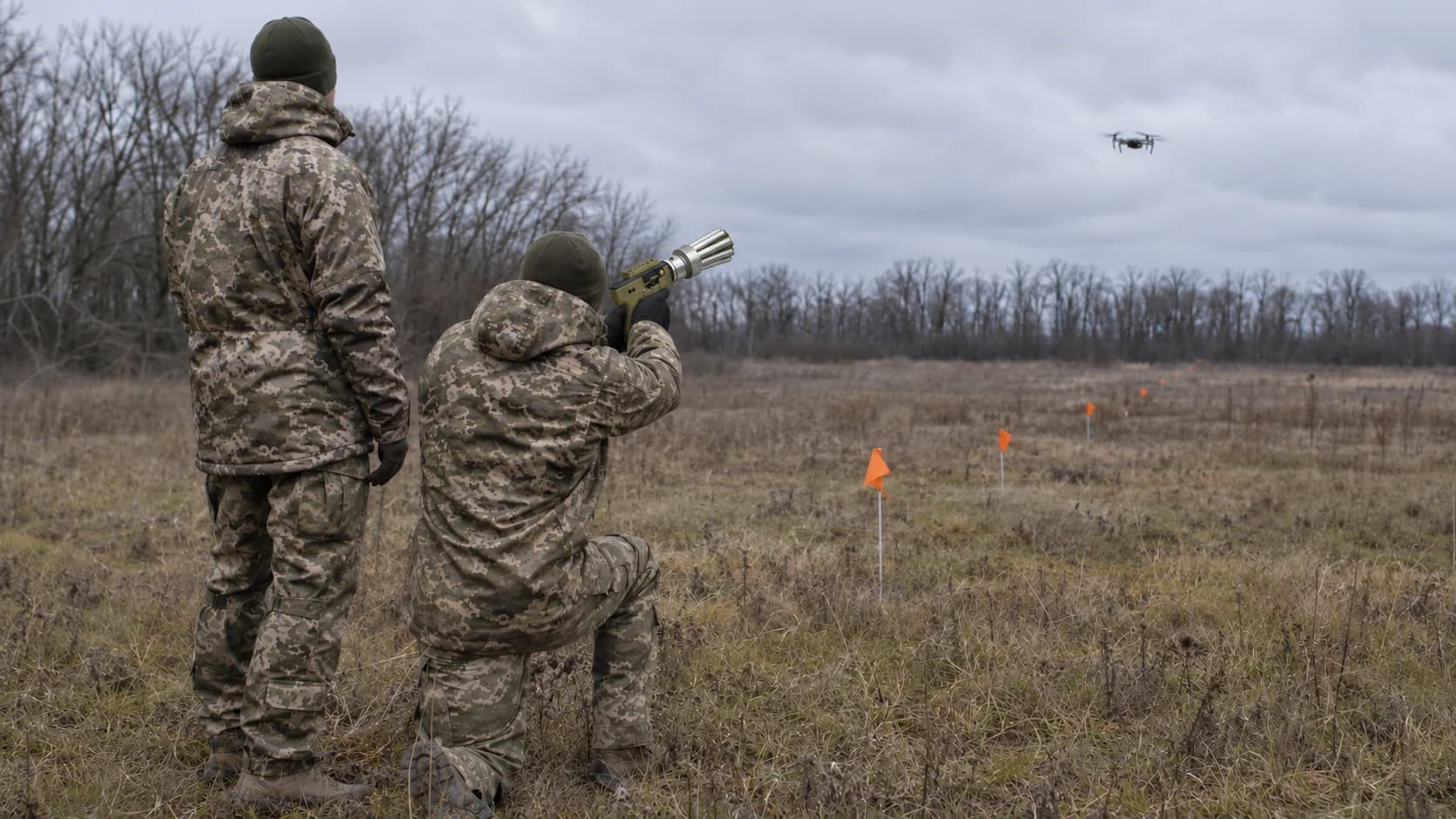
Handheld net launcher training
How to organise training with the Ptashka handheld net launcher: five stages, work with a training mock-up, exercise debriefs and cartridge records.
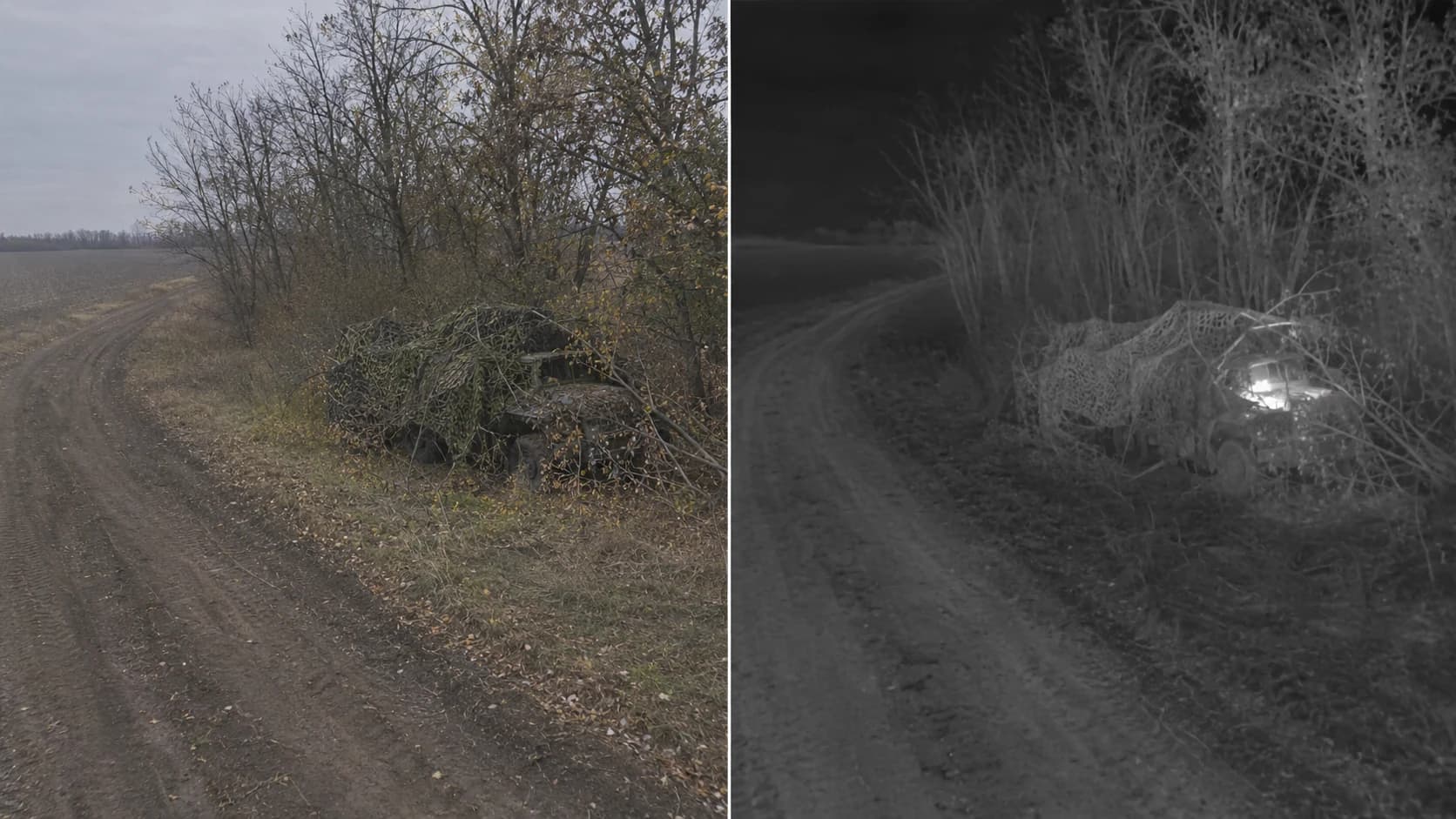
Day or thermal camera for FPV drones
Day and thermal FPV cameras compared by lighting, detail and limitations, with the camera options on Ptashka fibre-optic drones.
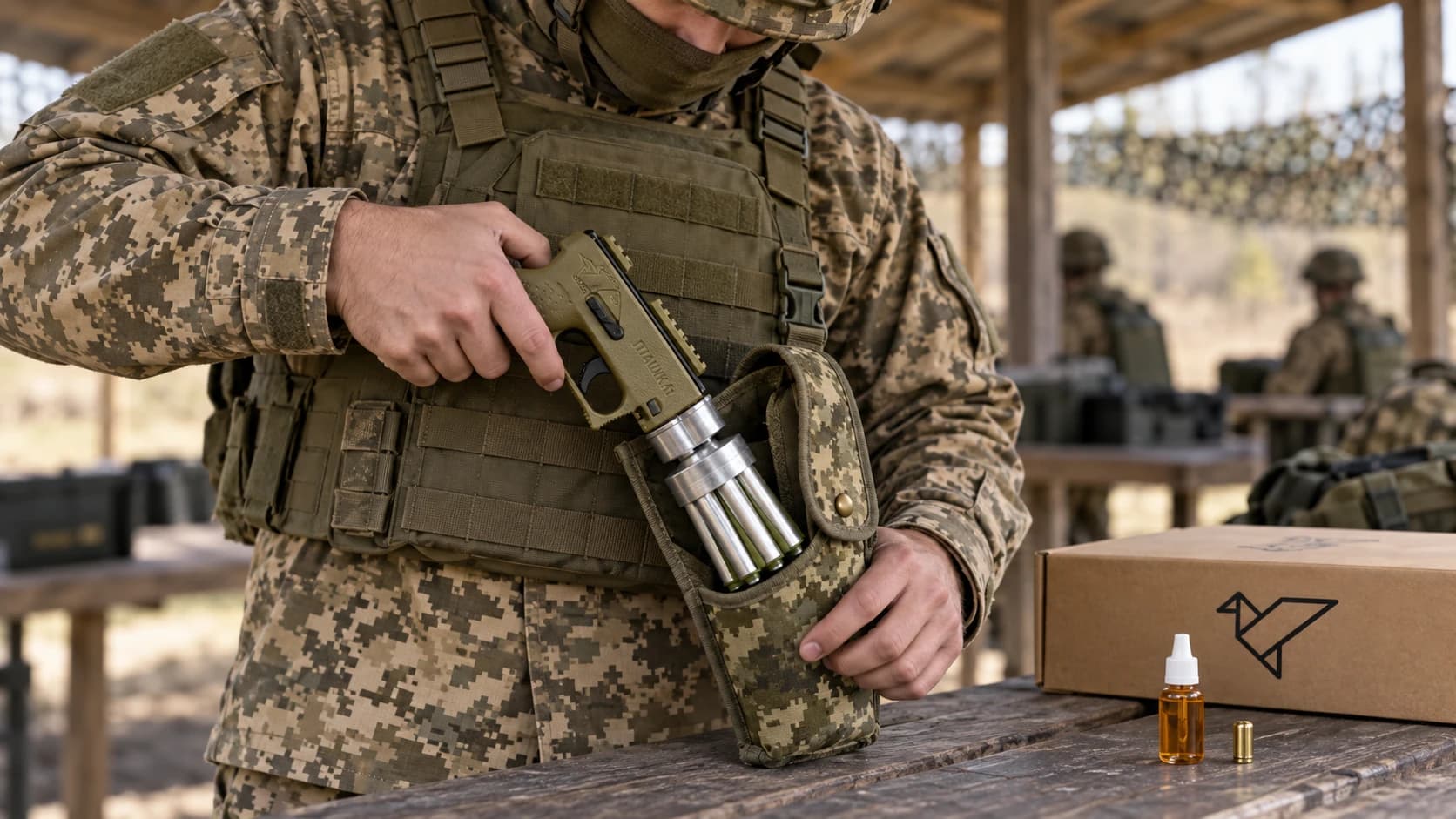
Choosing a handheld net launcher kit
Compare the confirmed contents of Ptashka Basic, Middle and Max handheld net launcher kits. Check the product version, documentation and indefinite free repair and service.
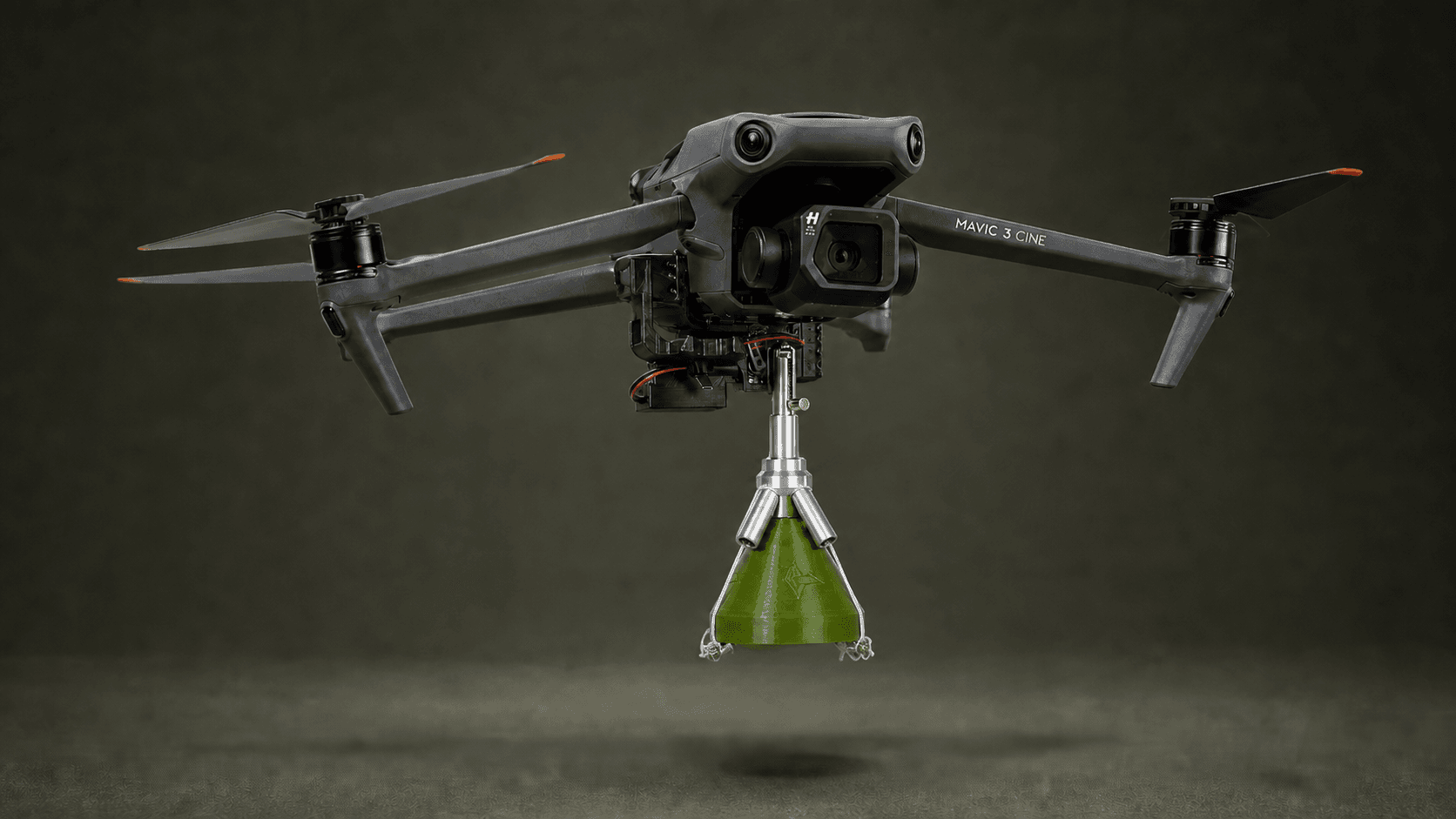
Mavic and Autel net launcher compatibility
Understand the distinction between a drone-carried net launcher and a handheld system. Confirm the precise Mavic, Autel or Matrice platform, version and supply before ordering.
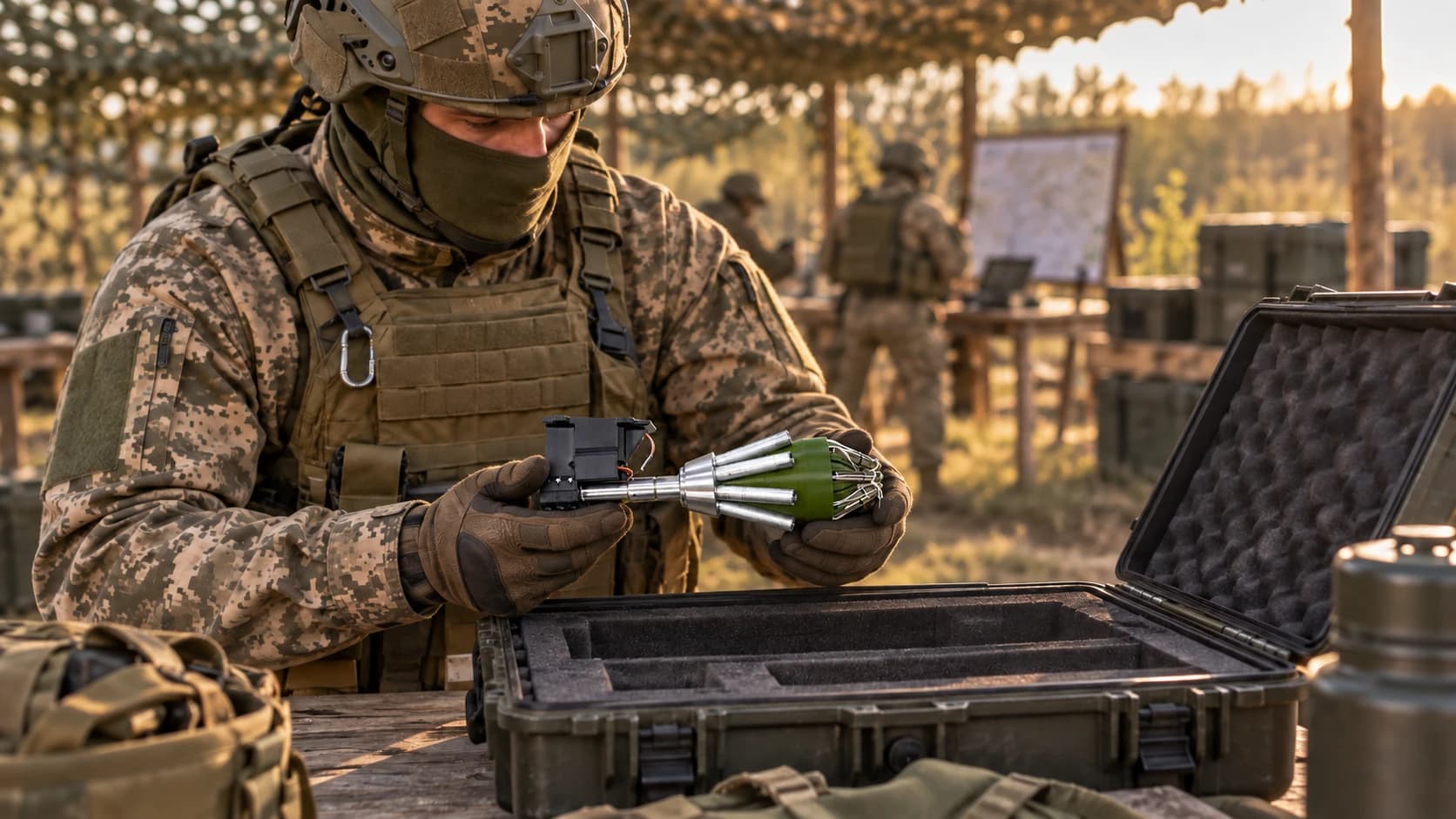
FPV drone net launcher
How an FPV-carried net launcher differs from handheld and Mavic formats. Check the precise platform, module version, supplied contents and documented limitations.
RF detection, electronic warfare and physical protection
Understand the differences between analog RF reception, radio-electronic countermeasures and physical interception, including the limits of Ptashka’s detector and net launchers.
RF detectors for teams, facilities and vehicles
Compare portable detector requirements for teams, facilities and vehicles without assuming universal coverage. Understand the analog-only Ptashka receiver and its limits.
Common FPV drone formats
Compare radio-linked and fibre-optic FPV formats by compatible equipment, complete supply contents, documentation and support rather than an unsupported popularity ranking.
How a fibre-optic FPV drone works
The roles of the optical channel, spool, airborne and ground equipment. Learn why fibre length is not guaranteed flight range and what to confirm before ordering.
Choosing an FPV drone
Check the aircraft version, controller and video compatibility, included equipment, power specifications, documentation and support before ordering an FPV drone.
An RF detector in a UAV detection system
How a portable RF detector contributes information to a wider UAV detection process, what Ptashka’s analog-only receiver can show, and why its limits matter.
What an RF drone detector can and cannot do
Distinguish supported RF reception and analog video from aircraft identification, coordinates and universal detection. A practical explanation of Ptashka’s limits.
Choosing a portable drone detector
Compare supported signals, frequency bands, displays, battery specifications and support before buying a portable drone detector. Understand Ptashka’s analog-only scope.
What is a fibre-optic drone?
Understand how fibre-optic FPV differs from a radio link, the roles of the airborne and ground parts, and why fibre length does not guarantee flight range.
What is an FPV drone?
An introduction to First Person View drones: the camera, video link, viewing equipment and control functions, with the differences between radio and fibre-optic formats.